Written by TC Team
Ask what Japan’s “tourist tax” is and you will get several different answers, because it is not actually one tax. There is a departure tax baked into your airfare, hotel taxes in some (but not all) cities, a small tax for bathing in hot springs, and the consumption tax on most things you buy.
The hype around them was overblown: these taxes are not big enough to change your plans, but several of them did increase in 2026 — and in a few places the hotel tax now scales steeply with how fancy your room is. Here is what you actually pay, and when — just in case you’re curious.
The taxes at a glance
| Tax | How much | How you pay it |
|---|---|---|
| Departure tax | ¥3,000 per departure | Included in your plane or ferry ticket |
| Hotel (accommodation) tax | Usually ¥100–¥1,000 per person, per night; up to ¥10,000 in Kyoto, and a percentage of the room price in the Niseko area | Added to your hotel bill in some cities |
| Onsen tax | Around ¥150 per night | On the bill at onsen ryokan and bathhouses |
| Consumption tax | 10% (8% on most groceries and takeout food) | Included in displayed prices |
The departure tax: 3,000 yen every time you leave
Japan’s international tourist departure tax — 国際観光旅客税, sometimes called the exit tax or shukkokuzei — has existed since January 2019. It was ¥1,000 for its first seven and a half years; since July 1, 2026, it is ¥3,000. The rate is flat: the same in economy or business, by plane or by ship, whatever your nationality. Japanese citizens pay it too.
You do not queue up to pay it anywhere. Airlines and ferry companies normally collect it on the government’s behalf, usually by building it into the ticket price — so by the time you see a fare, the tax is generally already inside it. Look for it in the taxes-and-fees breakdown; some carriers itemize it separately.
Important: The rate is set by when your ticket was issued, not when you fly. Tickets issued on or before June 30, 2026 generally keep the old ¥1,000 rate for a later departure, provided the departure date was fixed when you booked and has not changed since.
Leaving more than once?
The tax is charged per departure, not per visit. Fly Tokyo to Seoul for a long weekend mid-trip, then home at the end, and you have left Japan twice — that is ¥6,000, not ¥3,000. Add a Taipei hop and it is ¥9,000.
Transit passengers who arrive and leave by air within 24 hours fall under an exemption. Stay 25 hours and you pay.
Note: The revenue is earmarked for tourism infrastructure and measures against overtourism rather than general spending.
Hotel taxes: what each city charges
Japan has no national hotel tax. Instead, a growing list of cities and prefectures levy their own shukuhakuzei (accommodation tax) — charged per person, per night, and usually tiered by each guest’s share of the room price. Booking sites sometimes include it in your total; otherwise it is collected at the hotel.
Here is what the big three cities charge:
| City | Room rate (per person, per night) | Tax per person, per night |
|---|---|---|
| Tokyo | ¥10,000–¥14,999 | ¥100 |
| Tokyo | ¥15,000 or more | ¥200 |
| Kyoto | Under ¥6,000 | ¥200 |
| Kyoto | ¥6,000–¥19,999 | ¥400 |
| Kyoto | ¥20,000–¥49,999 | ¥1,000 |
| Kyoto | ¥50,000–¥99,999 | ¥4,000 |
| Kyoto | ¥100,000 or more | ¥10,000 |
| Osaka | ¥5,000–¥14,999 | ¥200 |
| Osaka | ¥15,000–¥19,999 | ¥400 |
| Osaka | ¥20,000 or more | ¥500 |

Below the bottom threshold — ¥10,000 in Tokyo, ¥5,000 in Osaka — you pay nothing. Kyoto taxes every price band, and its steep upper tiers are new: the city raised its rates on March 1, 2026, making the ¥10,000 top band Japan’s highest flat-rate hotel tax (the overall crown belongs to the Niseko area — more below). Osaka’s current bands date from September 2025.
The taxes are per person, not per room, with the tier set by each person’s share of the room price. A family of four in one suite is taxed four times — but usually in a lower band than the room’s headline rate suggests, and children staying free generally attract no tax.
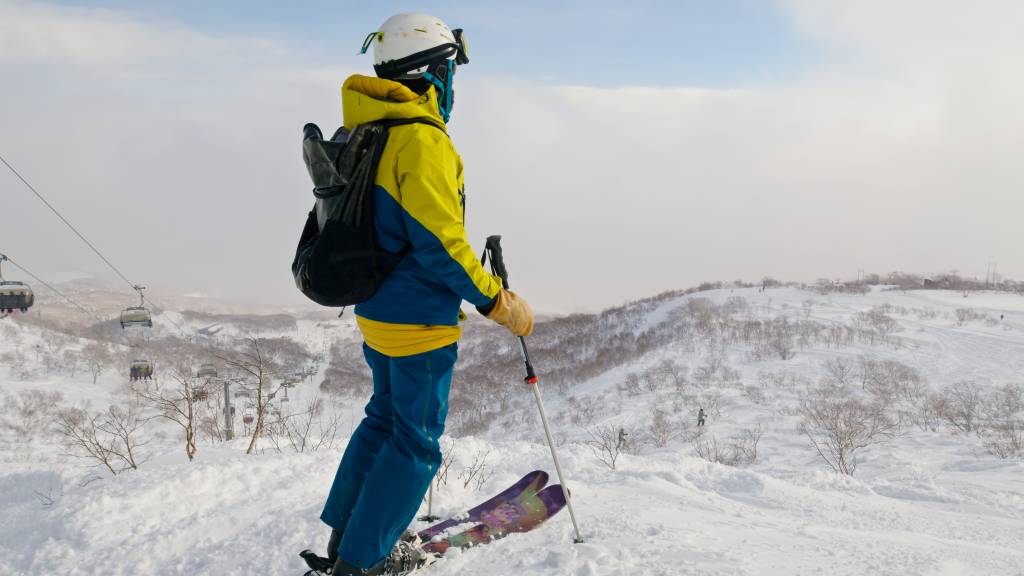
Hokkaido added a prefecture-wide tax in April 2026 — ¥100 to ¥500 per night, stacking with town taxes in places like Sapporo and Hakodate. The steepest is Kutchan, the town covering Niseko’s main ski resorts: since April 2026 it charges a flat 3% of the accommodation price, no upper limit — on a luxury chalet, that potentially beats Kyoto’s top band several times over.
More destinations join the list every year, so treat a small lodging tax as a normal part of a Japan hotel bill.
Important: Tokyo’s flat fees end on March 31, 2027. From April 1, 2027, the tax becomes 3% of the room rate, stays under ¥13,000 per person are exempt, and guesthouses, hostels, and private-lodging rentals join hotels and ryokan on the taxed list — expect this table to look different next year.
The onsen tax
Separate from hotel taxes, municipalities with hot springs levy a small nyūtōzei (bathing tax) on onsen users. The national standard is ¥150 per person, per night, though individual towns set their own amounts and some charge day-trippers a different rate.
It applies at onsen ryokan, hot-spring hotels, and some bath complexes, and it often shows up as a separate line on your bill at checkout. If you have ever wondered what that mystery ¥150 was — that.
Consumption tax and tax-free shopping
Japan’s consumption tax is 10% on most goods and services, and 8% on groceries and takeout food — though alcohol is always 10%. Displayed prices are required to include it, so the number on the shelf is generally the number you pay.
The visitor-relevant part is tax-free shopping: short-term visitors (foreign residents of Japan do not qualify) who spend ¥5,000 or more at a licensed store skip the consumption tax on those goods, with a ¥500,000 daily cap on consumables.
That system is about to flip — from November 2026 you pay full price at the register, get customs confirmation as you leave Japan, and the refund follows by bank transfer, card, or app. Our guide to the tax-free shopping change has the details.
Frequently asked questions
How much is Japan’s tourist tax?
There is no single tourist tax. Expect ¥3,000 in departure tax (included in your airfare), plus a hotel tax of roughly ¥100–¥1,000 per person, per night in most big tourist cities that charge one (more at Kyoto’s luxury tiers and around Niseko), plus about ¥150 a night anywhere with an onsen.
Do all Japanese cities charge a hotel tax?
No. Much of Japan still has no accommodation tax — it is a city-by-city (sometimes prefecture-wide) decision. Tokyo, Osaka, Kyoto, Fukuoka, Kanazawa, and — since April 2026 — all of Hokkaido are the big ones that do, and more join regularly.
Can I get any of these taxes refunded?
The consumption tax, yes — that is what tax-free shopping is. The departure, hotel, and onsen taxes have no tourist refund scheme. If you cancel, though, you are not out of pocket: the departure tax only falls due if you actually leave (a refunded ticket returns it), and hotel and onsen taxes are only charged for nights you actually stay (or facilities you enter, for daytrippers).
Sources
- National Tax Agency: international tourist departure tax (in Japanese)
- Accommodation tax pages for Tokyo, Kyoto, Osaka, Fukuoka, Kanazawa, Kutchan, and Hokkaido (in Japanese)
- Ministry of Internal Affairs and Communications: bathing tax outline (in Japanese)
- Ministry of Finance: FY2025 tax reform outline, tax-free shopping (in Japanese)
While we do our best to ensure it’s correct, information is subject to change.