 Written by TC Team
 Researched by Carey Finn
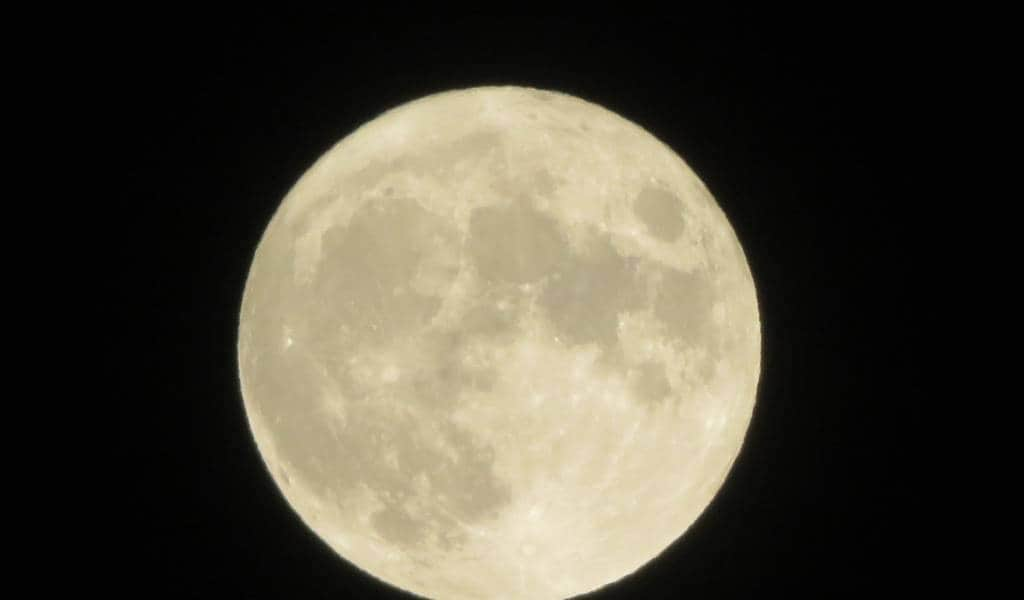
Autumn in Japan comes with a built-in reason to go outside after dark. Tsukimi (moon viewing) is the tradition of gathering to look at the harvest moon, and Tokyo marks it with garden openings, shrine festivals, and at least one neighborhood that turns the whole thing into street art.
Most of it is free or close to it. Here’s when the moon actually rises this year, and where to go and see it.
When is tsukimi in 2026?
The harvest moon — chūshū no meigetsu, literally the mid-autumn moon — falls on Friday, September 25, 2026.
Here’s a quirk worth knowing: it is not the full moon. The date comes from the old lunisolar calendar, which puts the harvest moon on the 15th night of the eighth month, and that does not always line up with the astronomical full moon. This year the full moon appears two days later, on September 27.
A two-day gap is uncommon. The last one was in 2017, and the next will not come until 2043, according to the National Astronomical Observatory of Japan.
In practice it means two good nights rather than one. The 25th is when the events happen; the 27th is when the moon is technically fullest.
Where to see the moon in Tokyo
Starry Moon Viewing at Cosmo Planetarium Shibuya
This is the best-timed of the lot, because it falls on the night itself. Cosmo Planetarium Shibuya runs five harvest-moon screenings on September 25, and the four evening ones finish with about 30 minutes of rooftop viewing over the Shibuya skyline.
Tickets are ¥1,500 for the evening screenings, or ¥1,000 for the shorter 5 p.m. session, which does not include the roof. Sales open on September 12.
Sunshine 60 Observatory
The other option with real telescopes, and the only one here that covers both nights. Sunshine 60 Observatory in Ikebukuro runs viewing sessions from September 24 to 27, with the telescopes set up indoors on the 60th floor.
On the 25th you look through them directly. On the 27th, for the full moon — nicknamed the Corn Moon — the view is projected onto monitors so you can pick out craters, and Saturn is close enough that night to go on the list too.
The sessions cost nothing beyond the usual observatory admission, which starts at ¥700 for adults on weekdays.
Mukōjima-Hyakkaen Garden — editor’s pick
A small, historical garden in Sumida Ward that stays open into the evening for moon viewing from September 24 to 26, with koto performances, tea ceremonies, and lanterns along the paths.
At ¥150 for garden entry, it is the cheapest proper tsukimi experience in the city, and the most traditional one on this list. Our top pick.
Fukagawa Jūgoya Festival
Tomioka Hachimangū shrine in Fukagawa holds its mid-autumn festival from September 23 to 27, with food stalls and the usual shrine-festival atmosphere alongside the moon viewing. Free to attend.

Moon Art Night Shimokitazawa
Less a viewing and more a takeover. Shimokitazawa fills its streets with moon-themed installations, including a giant illuminated moon, from September 18 to October 4. Free, and it runs longest of anything here, so it is the easy option if you cannot make the 25th.
It also opens during Silver Week.
Odaiba Drone Show
Not moon viewing in any traditional sense, but it is moon-themed and it is free. ODAIBA DRONE SHOW 2026 flies 1,000 drones over Tokyo Bay to draw a “Pixel Moon” alongside game and anime characters, synchronized with the waterfront fountain show. Two performances a night, at 7 p.m. and 9 p.m.
Important: the final run is September 18 to 22, which means it finishes three days before the harvest moon. If you were hoping to pair the two on one evening, you cannot.
Later in autumn
Moon viewing is not confined to one night, and the season’s other big garden event comes considerably later.
Hamarikyū Gardens extends its opening hours for a week from October 31 to November 5, lighting the paths and running ceremonies and guided walks after dark. Garden entry is ¥300.
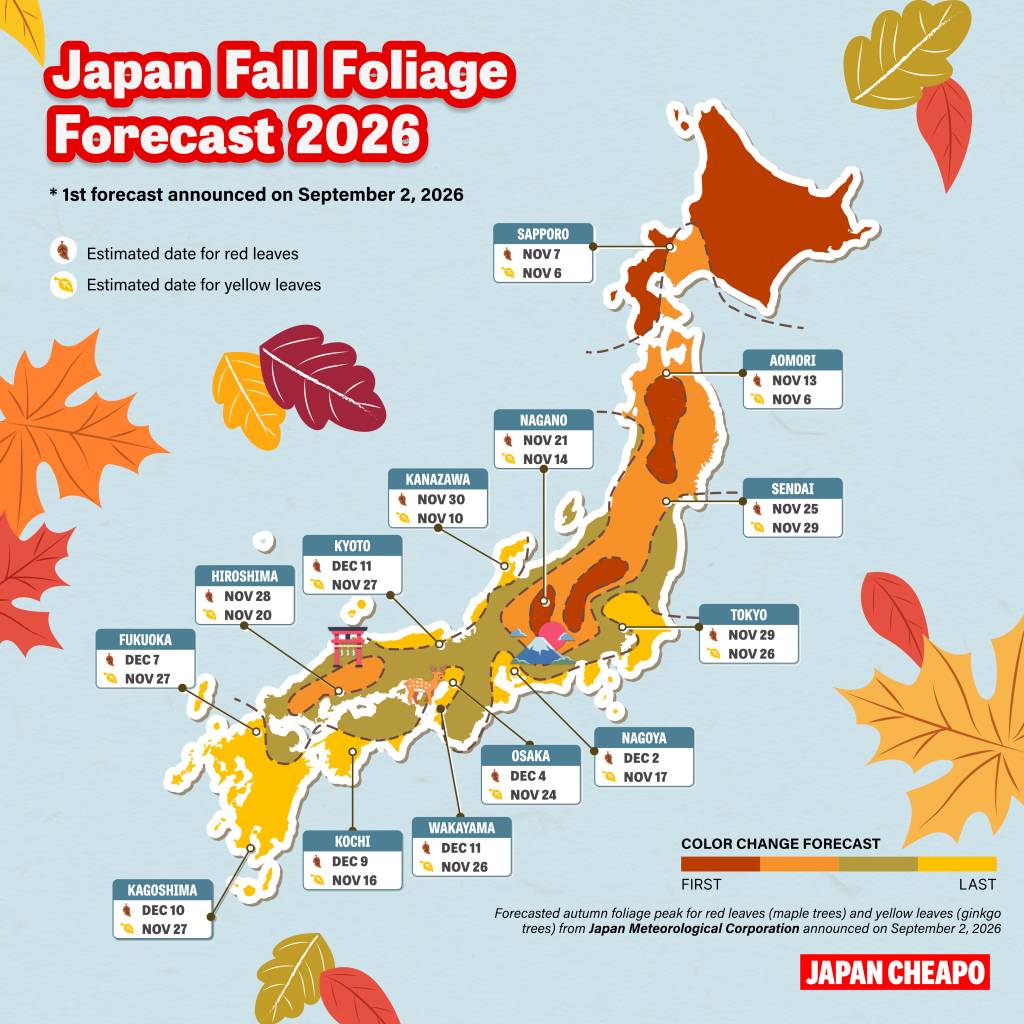
By then the air is clearer and colder, which is arguably better for looking at the sky, if worse for sitting outside with a bento. If you are planning around the season more broadly, our September events roundup and the fall foliage forecast are the places to start.
What people eat
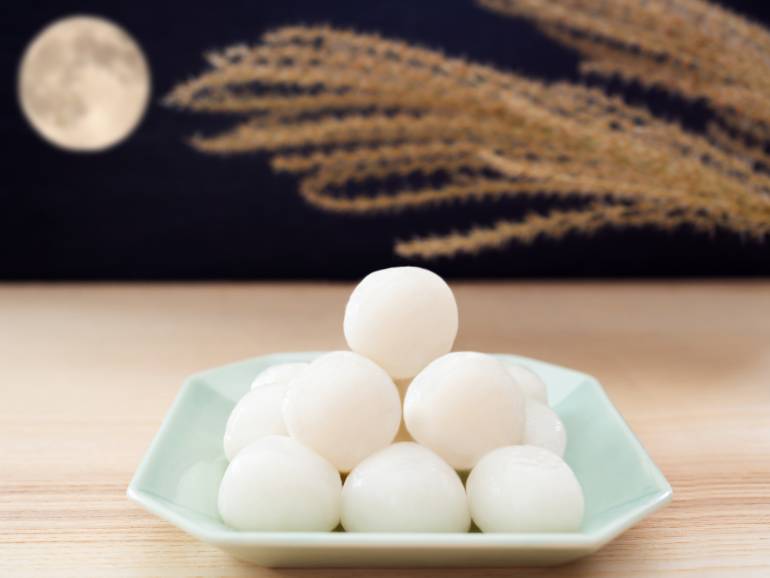
Tsukimi dango are the traditional item: plain rice-flour dumplings stacked in a pyramid, offered to the moon and then eaten. You will find them in supermarkets and confectioners through late September. Susuki (pampas grass) usually gets displayed alongside them.
The modern version is more commercial and more fun. Every autumn the fast-food and convenience-store chains roll out tsukimi menus built on the same visual pun — a round egg standing in for the moon — and the seasonal doughnuts, burgers, and pizzas arrive in the shops from late August. They are cheap, they are everywhere, and they last about a month.
Pro tip: The gardens above allow food but not alcohol in most cases, and several have limited seating. A convenience-store run beforehand is the standard approach.
Frequently asked questions
Is the harvest moon the same as the full moon?
Not always, and not in 2026. The harvest moon follows the old lunisolar calendar and falls on September 25 this year, while the astronomical full moon is on September 27.
Do I need a ticket for moon viewing?
For most of these, no. The Fukagawa festival and Moon Art Night are free, and the two gardens charge only their normal entry fee. The Sunshine 60 sessions are covered by regular observatory admission. The planetarium is the exception and does need a ticket booked in advance.
What happens if it rains?
Unless it is very heavy rain, the gardens and the shrine festival generally go ahead, but check the official pages before heading out. The planetarium’s rooftop session is weather-dependent, though the screening itself still runs.
Is there a second moon-viewing night?
Yes. The tradition of jūsan’ya marks a second viewing about a month after the harvest moon — October 23 in 2026, according to the National Astronomical Observatory of Japan — and it was once considered unlucky to observe one without the other. It is much less widely celebrated now.
While we do our best to ensure it’s correct, information is subject to change.