Written by TC Team
 Researched by Alexandra Ziminski
Often overshadowed by their hot-chocolate-loving winter counterparts, autumn light-ups tend to fall off the radar. But who doesn’t love glowing orange canopies, atmospheric mist, and projection mapping alongside their fall leaves?
Here’s our pick of the best autumn illuminations for 2026, from gleaming ginkgo avenues to after-dark temple visits. For daytime viewing, see our guide to the best places to see autumn leaves around Tokyo.
1. Rikugien Gardens
November 25 to December 66 p.m. to 8:30 p.m. (last entry 7:30 p.m.)
¥1,000 in advance, ¥1,200 on the day

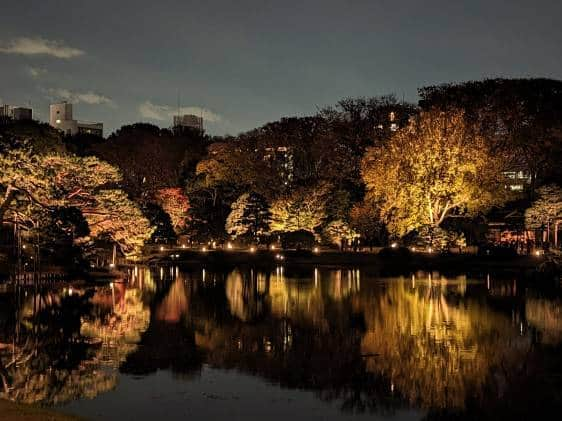
The classic. Rikugien, an Edo-period stroll garden near Komagome Station, lights its maples and pond for 12 nights around peak color. New this year is projection mapping on the old storehouse and in the bamboo grove. You’ll also find matcha-and-sweets sets at the Fukiage-chaya and Shinsentei teahouses, plus food stalls and food trucks.
| Advance sales: ¥1,000 | At the door: ¥1,200 | |
2. Koganei Park (Flower and Light Movement)
October 23 to November 85 p.m. to 8 p.m. (until 8:30 p.m. on weekends and holidays)
Free
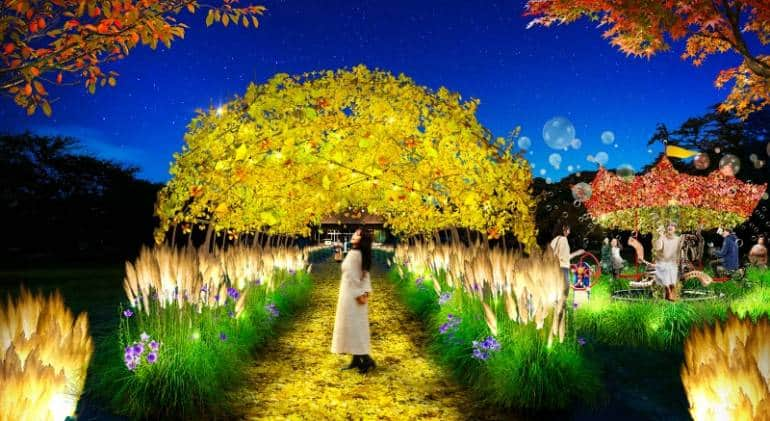
Out in western Tokyo, Koganei Park hosts the autumn edition of the Tokyo Metropolitan Government’s Flower and Light Movement, which lights up a different metropolitan park each season. This year’s theme is Akiiro Monogatari (roughly, “a story in autumn colors”): seven lit-up areas along the path from the main lawn to the Edo-Tokyo Open Air Architectural Museum, including a cosmos field lit by arches of light set to music, a wood of golden trees with wind chimes, and a picnic area with food trucks.
It’s free, there are lantern-making and other workshops (mostly paid, from ¥200) on Fridays, weekends, and holidays, and the museum next door has its own evening light-up on November 6 and 7 for the regular ¥400 admission. The park is a short bus ride from Musashi-Koganei Station.
3. Shōwa Kinen Park Autumn Night Walk
October 29 to November 294:30 p.m. to 8:30 p.m.
¥450 park entry; ¥1,200 extra for the Japanese Garden

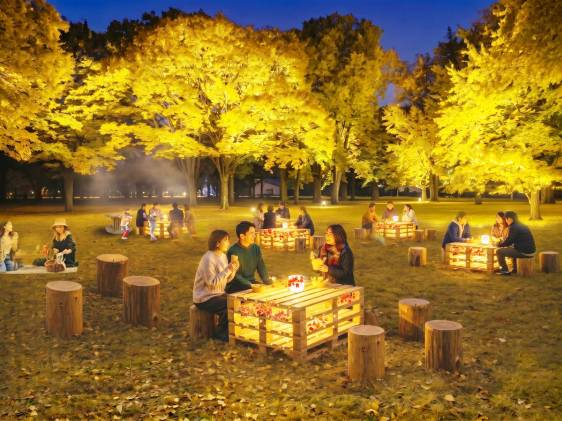
Out west in Tachikawa, Shōwa Kinen Park lights up its ginkgo avenues every evening for a month. The 300-meter Katarai Ginkgo Avenue gets a light show set to music, and two more rows of ginkgo are lit up near Tachikawa Gate.
Both are covered by the regular park ticket. The Japanese Garden, with around 300 maples reflected in its pond, needs an extra light-up ticket: ¥1,200 online or ¥1,300 at the counter.
There’s far more room to breathe here than at the central Tokyo spots.
Pro tip: On the first two nights, October 29 and 30, the Japanese Garden is included in the regular park ticket.
4. Koishikawa Kōrakuen
November 13 to November 246 p.m. to 9 p.m. (last entry 8 p.m.)
¥1,000 in advance, ¥1,200 on the day
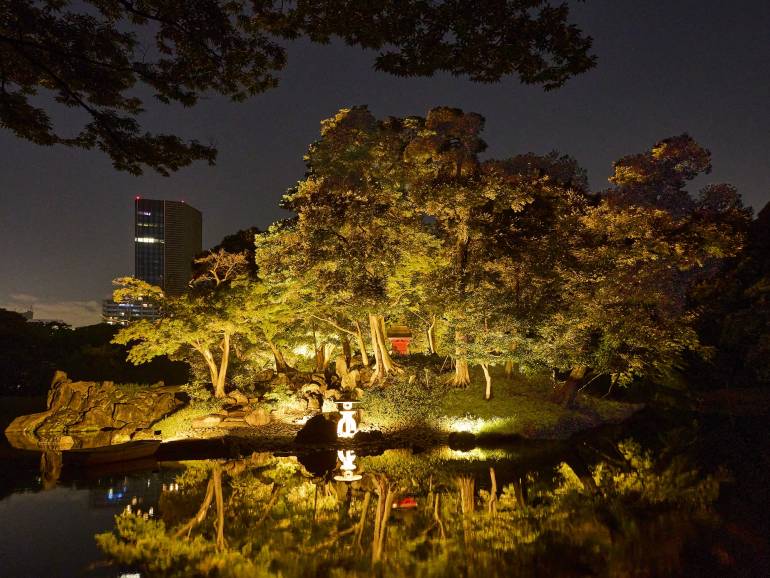
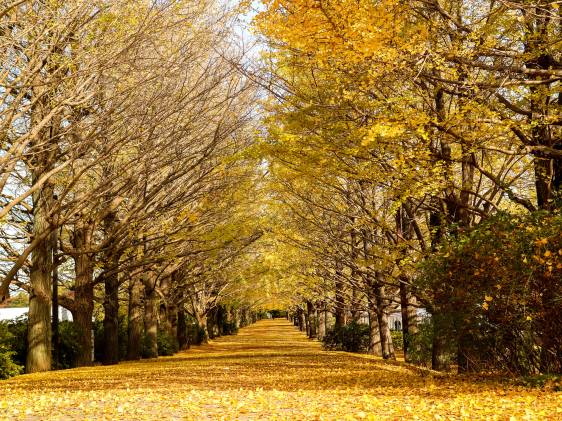
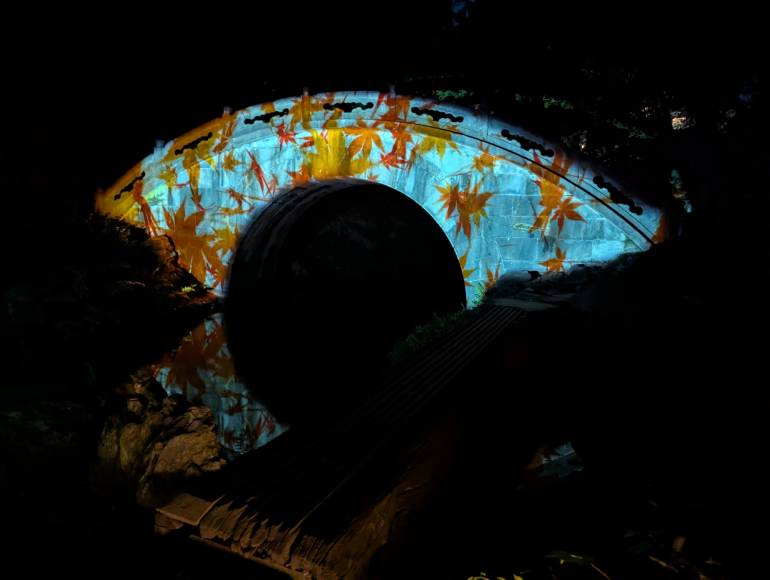
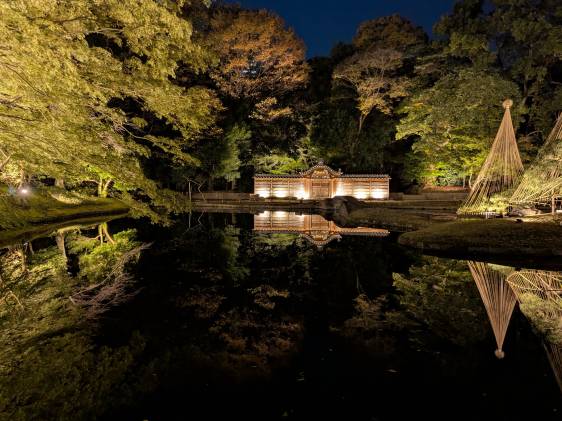
Tokyo’s oldest surviving daimyo garden, right next to Tokyo Dome, Koishikawa Kōrakuen reopens after dark for 12 nights in November. The ponds, bridges, and maples are lit, and this year’s projection mapping shows Edo-era pictures on the garden’s old earthen wall and the Engetsukyō bridge.
There’s a stamp rally, food trucks, and a night-only matcha set at the teahouse. The garden closes at 5 p.m. as usual and reopens at 6 p.m. for the light-up, so you can’t stay on from a daytime visit. Enter by the West Gate, near Iidabashi Station; you’ll leave by the East Gate.
| Advance sales: ¥1,000 | At the door: ¥1,200 | |
5. Meiji Jingu Gaien Ginkgo Avenue
Late November (2026 dates usually confirmed early November)4:30 p.m. to around 7:30 p.m. (2025 hours)
Free

Tokyo’s most famous autumn avenue: four rows of ginkgo trees that turn the road to the Meiji Memorial Picture Gallery bright yellow. In recent years, it has been lit up for a week or so when the leaves peak. In 2025, that was November 22 to 30, from 4:30 p.m. to around 7:30 p.m.
The 2026 dates haven’t been announced yet. Last year’s announcement came out in early November, so we’ll update this page when it does. It’s usually free, so expect it to be packed, especially on weekends.
Note: The Meiji Memorial Picture Gallery at the end of the avenue is closed for repairs until around the end of May 2027, so the classic view may not look quite the same. The avenue itself is open.

6. Zen Night Tokyo (Tokyo National Museum)
October 14 to December 6 (closed most Mondays and November 24)5:30 p.m. to 7:30 p.m. (until 9 p.m. on Fridays, Saturdays, and November 1, 2, and 22)
¥4,200 on the door
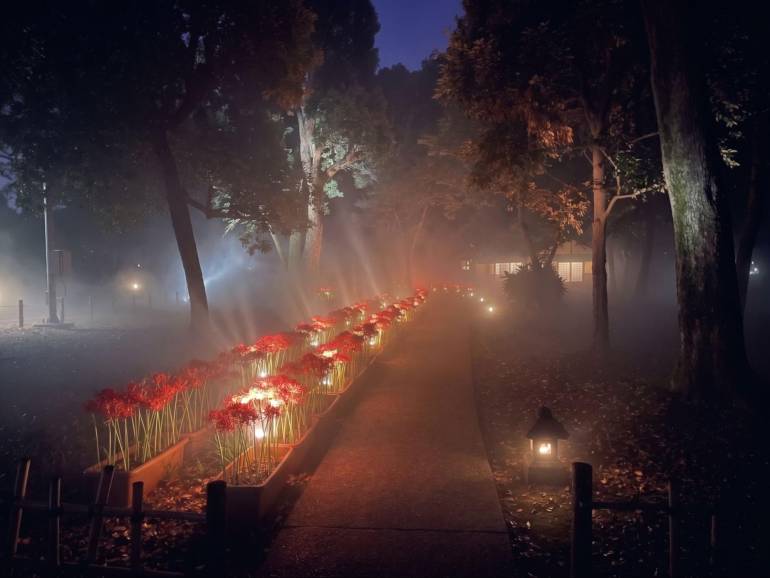
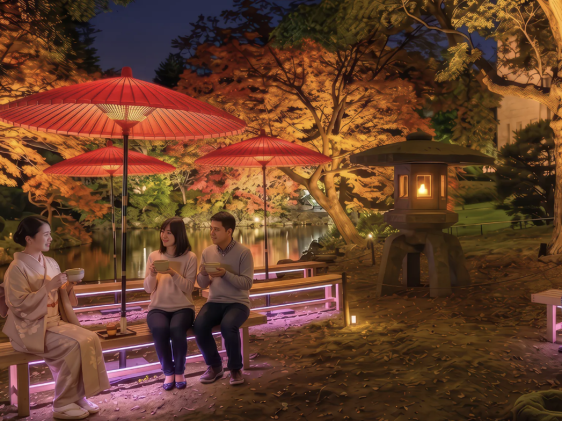
The Tokyo National Museum in Ueno opens its garden after dark for the first Tokyo edition of Zen Night, an after-hours “walking zen” experience with mist, music, and lights. The pond is lit to mirror the autumn leaves, so it’s ideal to go during the peak. There’s also an outdoor tea stall serving matcha, a dazzling rock garden, and a glowing red spider lily walk.
It’s the priciest entry on this list, but the ticket also gets you into the museum’s special exhibition marking 700 years of Daitoku-ji, a major Zen temple in Kyoto.
| Advance sales: ¥4,200 | ||
| Advance sales: ¥3,200 | ||
7. Ōtaguro Park
Late November to early December (2026 dates to be confirmed)From 5 p.m. (2025 hours: until 8 p.m. Monday to Thursday, 9 p.m. Friday to Sunday)
¥300 (2025 price)

This small Japanese garden in Ogikubo was once the home of music critic Motoo Ōtaguro. It’s lined with old ginkgo trees and maples, and when they’re lit, they reflect in the pond.
In 2025, the autumn illumination ran from November 28 to December 7 and cost ¥300 for adults and ¥100 for elementary and junior high school students. Preschoolers were free. Entry during the day is free, but the park closes at 4:30 p.m. and reopens at 5 p.m. for the light-up.
Suginami City announces the dates in November, sometimes only a day before the start, so check back then.

| At the door: ¥300 | ||
Autumn light-ups beyond Tokyo
These may need a day trip from Tokyo, but are worth the effort.
8. Zen Night Kamakura (Kenchō-ji Temple)
October 29 to December 65 p.m. to 8 p.m. (last entry 7:30 p.m.)
From ¥2,400 (weekday advance)
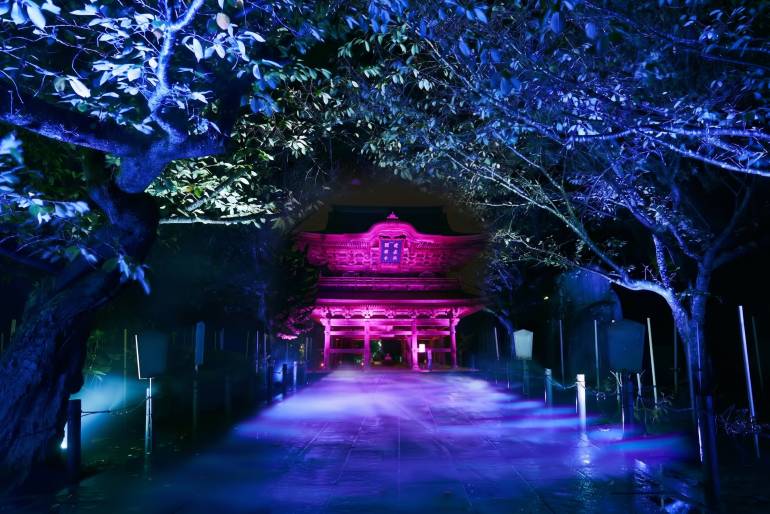
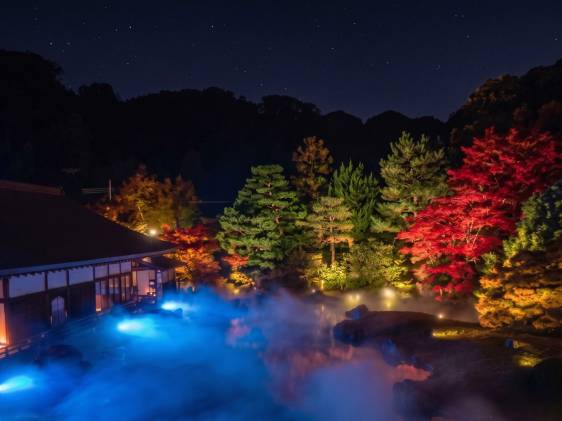
Zen Night returns to Kenchō-ji, the top-ranked of Kamakura’s five great Zen temples, for a second year. The headline is a man-made sea of clouds across the lit-up Hōjō Garden, surrounded by autumn leaves, with wind chimes along the path to the Sanmon Gate and the dragon painting in the Dharma hall lit with sound and light.
Prices depend on the day. Advance tickets cost ¥2,400 for adults on weekdays and ¥2,900 on weekends and holidays. On the door, it’s ¥2,900 and ¥3,400. The ticket window is cashless.
9. Hase-dera Temple, Kamakura
November 21 to December 6Sunset to 7 p.m. (gate closes; grounds close at 7:30 p.m.)
¥400
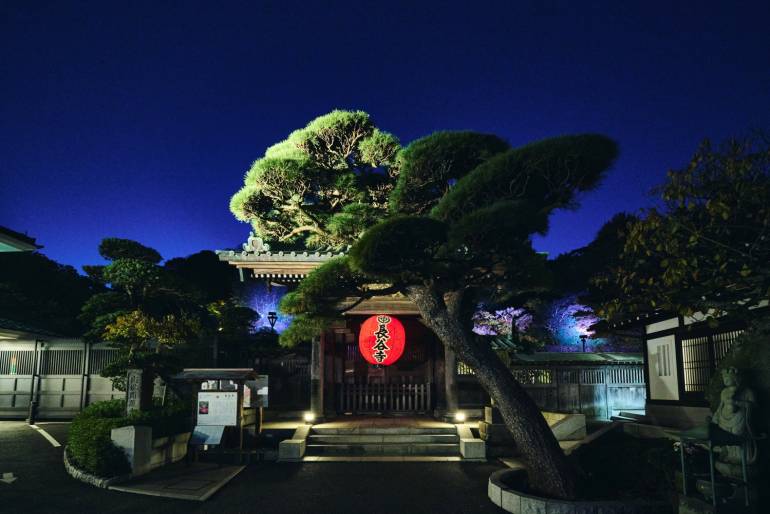
Best known for its summer hydrangeas, Hase-dera also opens in the evening when its maples turn. From sunset, the leaves around the ponds and temple buildings are lit.
Entry is the usual ¥400 for adults and ¥200 for elementary school students, making it one of the best-value light-ups around. It goes ahead in the rain (but not in stormy weather), and it may be extended if the leaves are late.

| At the door: ¥400 | ||
| At the door: ¥200 | ||
10. Mount Ōyama (Ōyama-dera Temple and Afuri Shrine)
November 20 to November 29Sunset to 7 p.m. on weekdays, 8 p.m. on weekends and holidays
Free (cable car extra)
Mount Ōyama in Isehara, Kanagawa, is one of the best-value autumn trips from Tokyo. During the light-up, the maples lining the stone steps up to Ōyama-dera Temple are lit, and further up, Ōyama Afuri Shrine looks out over the lights of the Kantō Plain at night.
Viewing is free. The Ōyama Cable Car runs until 7 p.m. on weekdays and 8 p.m. on weekends and holidays during the light-up, and costs ¥640 one way or ¥1,270 return to the shrine, or ¥360 one way to the temple stop. Those are adult fares; children pay roughly half.
From Isehara Station on the Odakyū Line, take a bus from stop 4 at the north exit to the Ōyama Cable bus stop (about 30 minutes), then walk 15 minutes up to the cable car. Weekends get very busy, so leave plenty of time. See our Mount Ōyama day trip guide for the full route.
11. Nagatoro Autumn Leaves Festival
November 6 to November 29 for the light-up (may shift with the leaves)4 p.m. to 9 p.m.
¥300 in 2025 (2026 price to be confirmed)
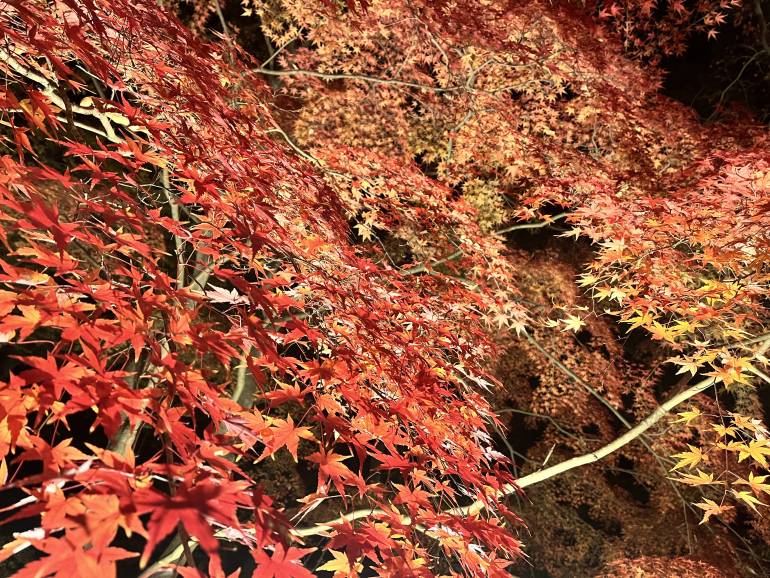
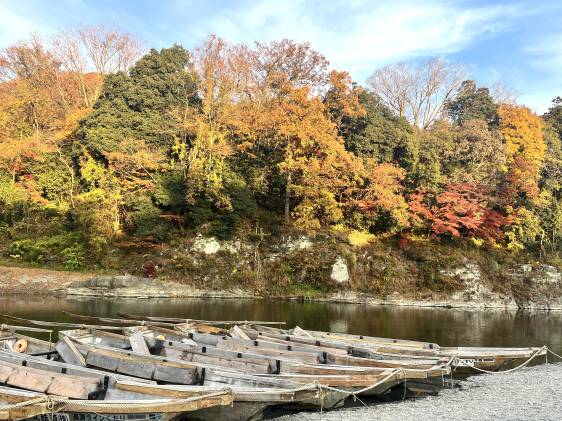
Nagatoro, a river town in Saitama’s Chichibu area, is known for its fall colors along the Arakawa River, and its autumn leaves festival runs all of November. The main light-up is at Tsuki no Ishi Momiji Park, a short walk from Kami-Nagatoro Station, where maples overhang the river.
In 2025, entry to the light-up cost ¥300 for junior high school students and older. The 2026 price hasn’t been announced yet. In the day, you can see the leaves from riverboats or the Mount Hodo ropeway.
13. Fuji-Kawaguchiko Autumn Leaves Festival
November 7 to November 29Sunset to 9 p.m.
Free

At the foot of Mount Fuji, the Momiji Corridor on the north shore of Lake Kawaguchiko is a tunnel of maples. During the festival, it’s lit up every evening from sunset, with various events around the area. Entry is free.
It’s a long way to go just for the evening, so make a day of it with our Kawaguchiko day trip guide. The nearest bus stop is Itchiku Kubota Art Museum, on the Red Line sightseeing bus.

14. Shuzenji Niji-no-sato, Izu
November 7 to December 135 p.m. to 9 p.m. (last entry 8:30 p.m.)
¥2,600
Shuzenji Niji-no-sato is a theme park on the Izu Peninsula with English- and Canadian-style villages, and a maple forest that’s lit up in autumn. The maple light-up runs alongside the park’s winter illumination and both are covered by one ticket: ¥2,600 for junior high school students and up, ¥1,500 for children aged 4 and up.
On November 14, 22, and 28, there are fireworks too, and tickets are ¥3,300 and ¥2,200. Advance tickets are sold online.
It’s about 20 minutes by bus from Shuzenji Station on the Izu-Hakone Railway. Plan the rest of your trip with our Shuzenji day trip guide.

Still hungry for lights? Many winter illuminations start around peak kōyō (changing of the leaves) in November, so check out our winter illuminations list too.
While we do our best to ensure it’s correct, information is subject to change.
Get our Tokyo Cheapo Hacks direct to your inbox






-
Tokyo Events This Week: Christmas Markets, Tori-no-Ichi, and Fireworks
Tokyo events for Monday, November 16, to Sunday, November 22, 2026.
-
Top 16 Picks for Tokyo Winter Illuminations 2026–2027
Gorgeous evening strolls await.
-

Tokyo Events This Week: Yoyogi Forest of Lights, Santa Parade, and Christmas Markets
Tokyo events for Monday, November 9, to Sunday, November 15, 2026.
-
Tori-no-Ichi 2026: Where To Find Tokyo's Lucky Rake Fairs
The best shrine festivals around Tokyo.
-

11 Must-See Fall Music Festivals
The first half of fall music fests has finished; the second is firing up.
-
15 Things To Do in Akihabara
A first-timer's guide to exploring Tokyo's anime and gaming hub.
-

25 Things To Do on a Rainy Day in Tokyo
Grab your umbrella and go have some fun (as long as it's not a typhoon or other treacherous conditions).
-

International Musicians Touring Japan in 2026–27
Updated with Radiohead, Maroon 5, Megadeth, Seal, and more.
-

Kōyō: 19 Places To See Autumn Leaves Around Tokyo
The best parks, gardens, and day trips this fall.
-
8 Best Fall Festivals in and Around Tokyo
Including some very special moon-viewing.
-
 Japan Travel Checklist: 10 Things to Do Before You Fly
-
 Japan Arrival Checklist: 7 Things to Do When You First Arrive
-
 The Best Pocket Wi-Fi for Visiting Japan — Compared
-
 Bounce Luggage Forwarding in Japan: How to Send Your Bags Ahead and Travel Hands-Free
-
 Morning Sumo Practice in Tokyo—Everything You Need To Know
-
 First-Time Harajuku Itinerary: Fashion, Street Food, and More