Written by TC Team
 Researched by Carey Finn
Japan gets a rare five-day holiday this September. Silver Week runs from Saturday, September 19 to Wednesday, September 23, 2026 — the first time the dates have fallen this way since 2015.
For anyone in Tokyo, that means fuller trains, higher hotel prices outside the city, and a lot of residents heading out of town. It also means a quieter capital in places, and a packed calendar of festivals, fireworks, and exhibitions. Here’s what to expect, and how to make the week work in your favor.
When is Silver Week 2026?
| Date | Day | Status |
|---|---|---|
| September 19 | Saturday | Weekend |
| September 20 | Sunday | Weekend |
| September 21 | Monday | Respect for the Aged Day |
| September 22 | Tuesday | Citizens’ holiday |
| September 23 | Wednesday | Autumnal Equinox |
What makes it interesting is that September 22 is not a holiday in its own right. Under Japan’s holiday law, a weekday with a public holiday on either side automatically becomes a holiday too. We happen to think this is one of the best laws in the world.
Respect for the Aged Day falls on Monday the 21st and the Autumnal Equinox on Wednesday the 23rd, so the Tuesday between them becomes what the government calls a citizens’ holiday. That turns a normal long weekend into a five-day run. You can confirm the dates on the Cabinet Office holiday list (in Japanese).
This alignment needs Respect for the Aged Day and the equinox to sit exactly two days apart, which does not happen often. The last five-day Silver Week was in 2015.
Pro tip: Taking two days of leave on September 24 and 25 turns the run into nine days off, ending Sunday September 27. Plenty of people in Japan will do exactly that, so the return crush is spread across a wider window than you might expect!
What’s open and what’s closed
Most of what a visitor needs stays open. Convenience stores, restaurants, department stores, and the big sightseeing attractions all run normally, and in most cases they are busier than usual rather than quieter.
Banks, post offices, and government offices close on the three public holidays, and banks are shut for the weekend before them as well. That makes it a five-day stretch with no over-the-counter banking, so sort out anything administrative before the 19th. ATMs keep working, including the international-friendly ones in convenience stores.
Museums are the case worth checking, and this year the news is good. Many Tokyo museums close on Mondays, and when a Monday is a public holiday they stay open and push the closure to the next weekday. With holidays running through Wednesday, that pushed-back closing day doesn’t land until Thursday September 24.
In practice the big names — the Tokyo National Museum, the National Museum of Western Art, the National Museum of Nature and Science, and the Sumida Hokusai Museum — are open all five days and closed on September 24. Not everywhere follows the script, though: the National Museum of Modern Art is closed for the whole stretch (September 14–28) while it changes exhibitions, so check the venue’s own site before you build a day around it.
Getting around
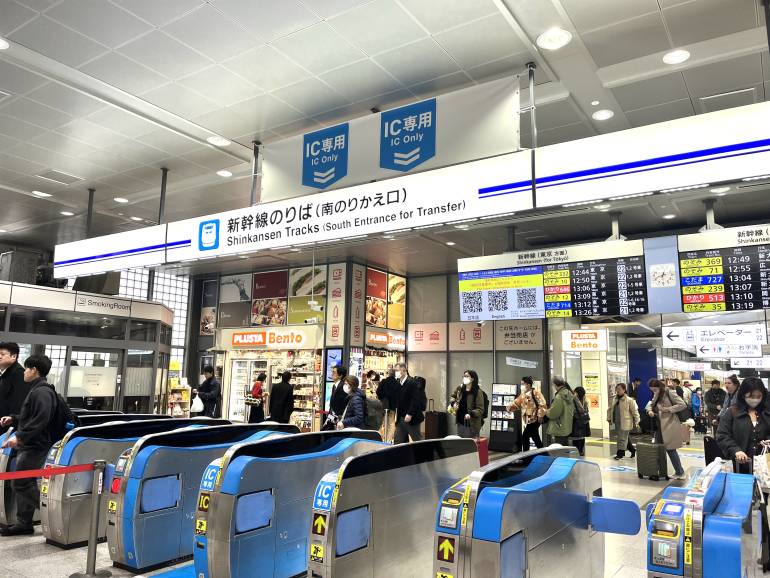
Tokyo’s trains keep running throughout, but several private railways and bus operators switch to their weekend and holiday timetable on the three public holidays. That usually means fewer peak-hour services rather than a reduced day overall, though it can stretch waits on suburban lines.
Long-distance travel is where the pressure shows. Reserved Shinkansen seats out of Tokyo on Saturday the 19th, and back into Tokyo on the 22nd and 23rd, are the pinch points. Reserved seats go on sale one month ahead, so those dates are already bookable — and for the return legs, already filling.
There is an important caveat: from September 18 to 23, every Nozomi runs with no non-reserved cars at all (in Japanese). The Nozomi is the fastest and most frequent service on the Tōkaidō and Sanyō Shinkansen — the line for Nagoya, Kyoto, Osaka, and Hiroshima.
The Hikari, Kodama, Mizuho, Sakura, and Tsubame trains keep their non-reserved cars, as do the slower trains on the Tōhoku, Jōetsu, and Hokuriku Shinkansen (Hayabusa and Komachi are reserved-only as always) — but expect a scrum for them on the peak days. If you have a fixed date, reserve. If you have flexibility, travel on Sunday the 20th or Monday the 21st, which sit in the perhaps slightly quieter middle of the run.
Highway buses are cheaper and hold up better on availability, though they are also subject to holiday traffic. Expressways out of Tokyo tend to back up on the first morning and the last afternoon.
Things to do in Tokyo
Silver Week lands in the middle of a strong run of exhibitions, and several close soon afterward.
- Ron Mueck — closes September 23, so Silver Week is the last chance (open until 10 p.m. on September 22).
- Spiral, Spiral: Evolving Human Narratives at MoN Takanawa, also closing September 23.
- Masterpieces of the Renaissance from the Musée du Louvre, which opened on September 9.
- Edo in Focus: Japanese Treasures From the British Museum, running to October 18.
- 100% Doraemon and Friends, to September 30.
- Re:Zero 10th Anniversary Exhibition, to October 4.
- On the Asymmetry of the Universe, a teamLab Borderless special, to October 8.
For things that cost nothing, Tokyo Night and Light projects onto the Tokyo Metropolitan Government Building most evenings, and Hatsune Miku Lights Tokyo runs through the period.
Dated events inside the week itself:
- ODAIBA DRONE SHOW 2026 — a thousand drones over Tokyo Bay, nightly at 7 p.m. and 9 p.m. to September 22. Free, and the best-value night out of the week.
- Tokyo German Village Fireworks — September 19.
- Moon Art Night Shimokitazawa — from September 18, and running past the holiday.
- Ikebukuro Flea Market — September 23.
- Red Spider Lily Festival at Kinchakuda — September 21 to October 6. A day trip out to Saitama for fields of higanbana, the red spider lilies that bloom right around the equinox.

Moon Art Night is well timed. The harvest moon falls on September 25 this year, so the moon-viewing season is just getting going as Silver Week ends.
Elsewhere in Japan
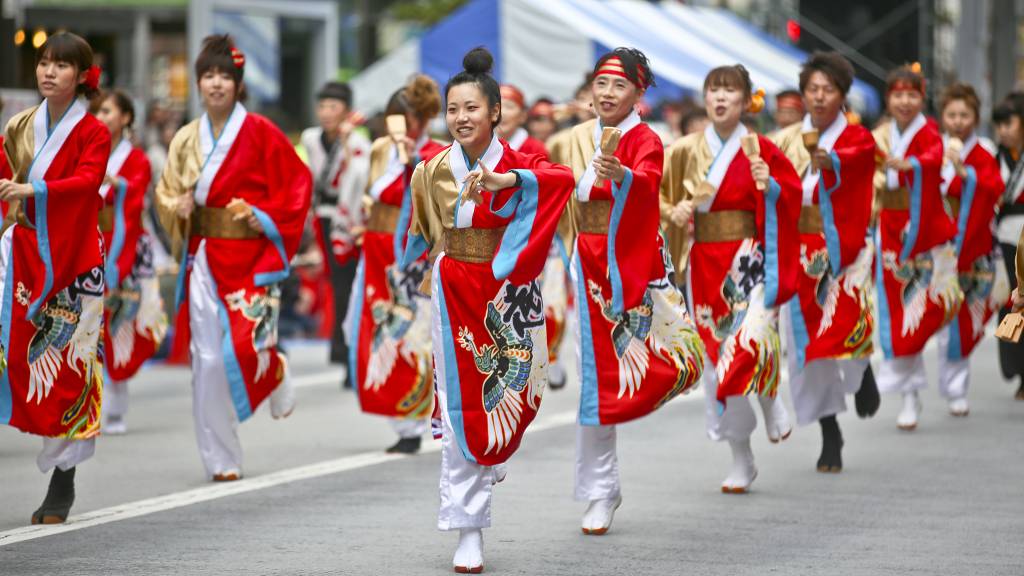
If you are traveling further afield, the festival calendar is unusually full over these five days. Here are some highlights:
- Aizu Samurai Festival in Fukushima — September 19–21.
- Ishioka Festival in Ibaraki — September 19–21.
- Kanazawa Geisha Performance — September 19–20.
- Seimei Festival in Kyoto — September 22–23.
- Himeji Port Fireworks — September 20.
- Suitō Kurawanka Fireworks Festival in Osaka — September 20.
- Sapporo Dōshin Autumn Fireworks — September 21.
- Sapporo Autumn Festival, running to October 3.
One thing to factor in: the Asian Games in Aichi-Nagoya open on September 19 and run to October 4. Accommodation around Nagoya will be tight for the whole of Silver Week, and trains through the area will be busier than the holiday alone would explain.
Frequently asked questions
Does Silver Week happen every year?
The name gets used loosely for the September holiday cluster, which happens annually. The five-day version only occurs when Respect for the Aged Day and the Autumnal Equinox fall two days apart, which is uncommon. Most years you get a three-day weekend instead.
Should I avoid traveling in Japan during Silver Week?
Not necessarily, but book transport and accommodation before you arrive rather than deciding on the day. If your dates are fixed and fall in this window, reserve seats as early as you can. If you are already in Tokyo and flexible, staying put is the cheap and comfortable option.
Will shops and restaurants be closed?
Very few. Retail and dining treat Silver Week as a busy trading period, not a shutdown. Banks, post offices, and public offices are the main closures. Museums generally stay open right through the holidays, taking their substitute closing day on Thursday September 24.
Is Silver Week the same as Golden Week?
No. Golden Week is the bigger and busier run of holidays from late April into early May. Silver Week is its smaller autumn cousin, and in most years it is much shorter.
While we do our best to ensure it’s correct, information is subject to change.