 Written by TC Team
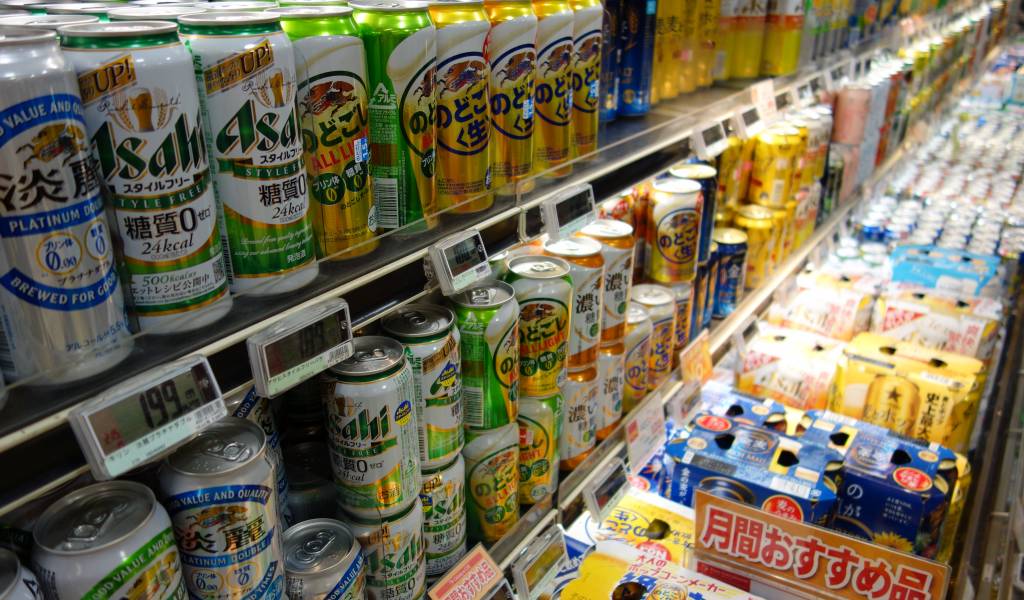
Ever wondered why one can of “beer” in a convenience store fridge costs less than the one right next to it? The answer was always tax, but as of October 1, 2026, that gap is gone. Japan now taxes every beer-type drink at the same rate, so real beer actually carries less tax than before, while the budget lookalikes and canned chūhai (fizzy drinks made with shōchū or another spirit, usually fruit-flavored) carry more.
What changed
Japan’s liquor tax is charged by volume, and the Ministry of Finance helpfully converts it into yen per 350 ml can. The last step of a reform passed in 2017 put beer, happōshu (low-malt, beer-like drinks), and so-called “third beer” on the same rate: 155,000 yen per kiloliter, or 54.25 yen a can.
| Tax per 350 ml can | Before Oct. 2020 | Oct. 2020 | Oct. 2023 | Oct. 2026 |
|---|---|---|---|---|
| Beer | ¥77 | ¥70 | ¥63.35 | ¥54.25 |
| Happōshu (under 25% malt) | ¥46.99 | ¥46.99 | ¥46.99 | ¥54.25 |
| Third beer | ¥28 | ¥37.80 | ¥46.99 (reclassified as happōshu) | ¥54.25 |
| Chūhai and similar | ¥28 | ¥28 | ¥28 | ¥35 |
Compared with September, that’s 9.10 yen less tax on a can of beer and 7.26 yen more on happōshu and third beer. Chūhai went from 28 yen to 35 yen, the first time its rate has moved in the whole reform.
Why Japan had three kinds of “beer”
Short version: brewers got very, very good at reading the tax code. Beer has always carried a hefty tax in Japan, and whether a brew counts as beer comes down to how much malt is in it. So in 1994, just after the bubble economy burst, happōshu arrived, with too little malt to be taxed as beer and a price to match. It caught on during the recession as “tax-saving beer” (setsuzei bīru).
The government raised the tax on happōshu in 1996 and again in 2003. Brewers went lower still, with drinks made using things like pea-based ingredients instead of malt, which landed in cheaper categories such as liqueurs. These are the “new genre” or “third beer” (dai-san no bīru) cans, and their tax went up in 2006. One Japanese news report summed up the three decades of low-tax launches and tax hikes as a game of cat and mouse.
None of this was against the rules, to be clear. It was product design doing what the tax code rewarded, and it kept drinkers on a budget happy for years. The ministry’s own explanation for ending it is that tax gaps between similar drinks were shaping product development and sales, and that fairness between them needed restoring. So the gap closed in three steps: 2020, 2023 (when third beers were officially reclassified as happōshu), and now 2026.
What it means for your konbini run
A tax change isn’t a price tag. Big brewers including Asahi and Kirin revised their producer prices from October 1 to match the new rates, but what you pay at the register is up to each shop, and sales and multipacks muddy things further.
Shoppers do seem to have noticed. Supermarket sales data from research firm Merchandising-On showed beer volumes up 19.5% over October 1–3, compared with the same period last year, while third beer fell 35.1%. The firm itself warns that’s only three days of numbers, and weather, promotions, and shelf prices all play a part.
So if you were only reaching for the budget cans to save a few yen, the case for trading up to the real thing is stronger than it used to be. Chūhai is still taxed less than anything beer-like, at 35 yen a can against 54.25 yen, but it’s no longer quite the bargain it was.
Our guide to Japanese alcohol covers what else is in the fridge, from sake to shōchū. And our old taste test of nine ultra-cheap beers is still a fun read, though its prices now belong to history.
Source: Ministry of Finance
While we do our best to ensure it’s correct, information is subject to change.