 Written by TC Team
 Researched by Carey Finn
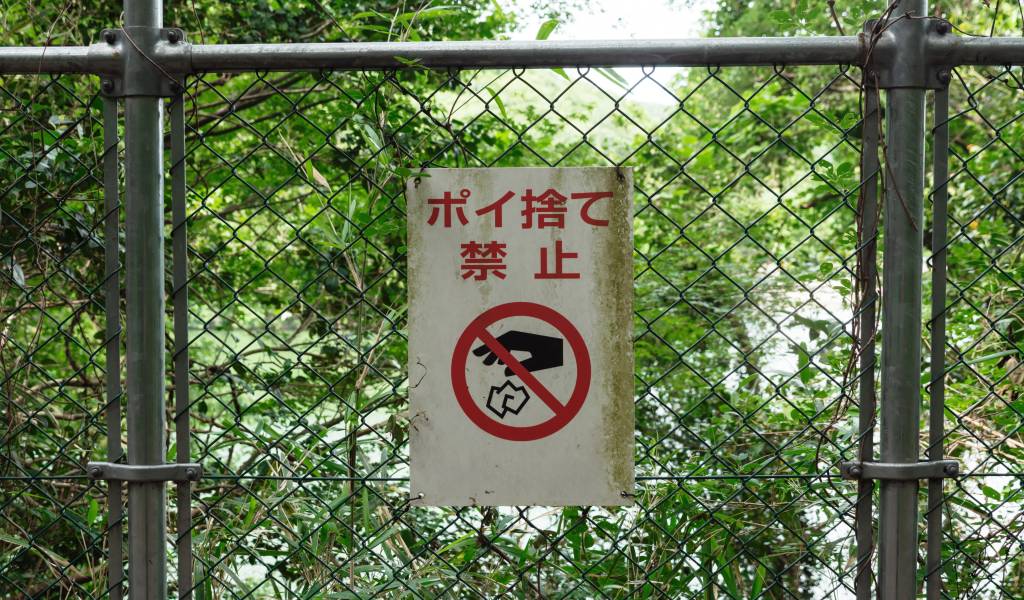
Tokyo is famously clean and famously short on public trash cans, which leaves plenty of us walking around with an empty coffee cup (or can of Strong Zero), wondering what to do with it. Specific anti-littering rules aren’t actually set by the city as a whole, but by each ward, and they vary.
tl;dr: Never leave your trash lying around in Tokyo or any other part of Japan. It’s not just bad form; it could get you fined.
For example, in Shibuya, patrol staff can fine you ¥2,000 on the spot. Here’s exactly what penalties apply where, and a few ideas for where you can throw things away — nicely and legally.
The short version
Littering is banned throughout Tokyo, and the rules apply to visitors as well as residents. Shibuya routinely fines people for dropping any kind of litter, and it collects the money on the spot.
Note: Littering is also an offense under national law anywhere in Japan, on top of what the specific ward rules say.
Smoking on the street can get you fined too. Shibuya and Chiyoda (home to Akihabara and the area around Tokyo Station) both fine ¥2,000 for smoking on the street, and dropping a cigarette butt will cost you the same ¥2,000 in both wards.
The simple way to stay out of trouble? Just be a decent person, carry a small bag for your trash if needed, and use the boxes next to vending machines ONLY for empty bottles and cans. Do not be that person shoving random rubbish in there.
Shibuya: spot fines
Shibuya Ward, which covers Shibuya, Harajuku, and Ebisu, has fined litterbugs on the spot since June 1, 2026. Up to 60 patrol staff a day cover the whole ward around the clock, and the rule applies everywhere, private land included.
If they see you drop something, they will collect a ¥2,000 fine there and then. You can pay in cash, by credit card, with a transit IC card like Suica, or by QR code. Can’t pay right away? They’ll give you a payment slip so you can pay later. And “I didn’t know the rule” won’t get you off.
What counts as litter is broad: cigarette butts, food and drink containers and packaging, chewing gum, wrappers, bags, and flyers.
Fun fact: Shibuya counted 963 fines across June, July, and August (provisional figures).
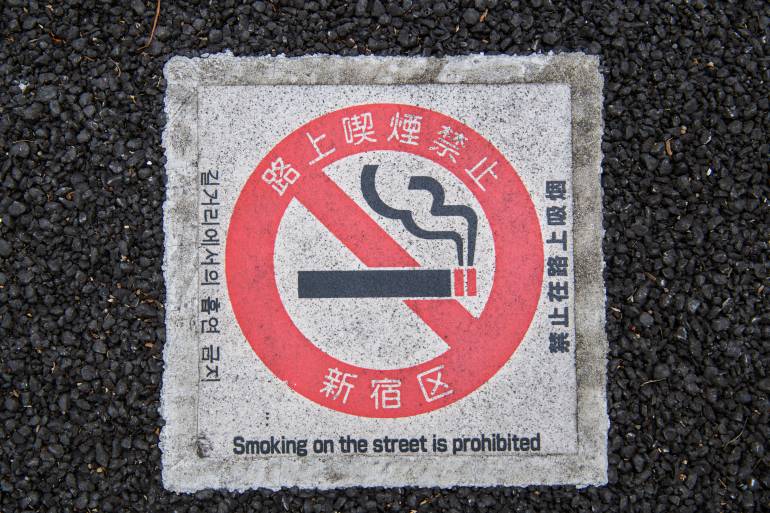
Shibuya also fines people ¥2,000 for smoking outdoors in public places, heated tobacco included. It handed out 27,516 of those fines in the year to March 2026. You can still light up at one of the ward’s designated smoking areas.
Booze on the loose: It’s worth knowing that in the area around Shibuya Station, drinking in public is banned too. Since October 2024, you can’t drink on the street, in parks, or in other public places there from 6 p.m. to 5 a.m., any day of the year.
Shinjuku: stricter rules from October 2026
Shinjuku Ward has banned littering since 1997, across the whole ward and for anyone passing through it. The rule currently covers drink cans and bottles, cigarette butts, gum, and paper. And from October 1, 2026, it also covers food containers and the things you eat with: bento boxes, snack and cup-noodle packaging, straws, disposable chopsticks, and skewers.
The ordinance does set a fine, but it works differently from Shibuya’s. It applies in three priority areas: around the east exit of Shinjuku Station (all of Shinjuku 3-chōme and most of Kabukichō 1-chōme), around the west exit, and around Takadanobaba Station. It’s a criminal fine of up to ¥20,000, so it can’t be issued on the street.
As for Shibuya-style on-the-spot fines, Shinjuku’s mayor said in June that fining everyone fairly would take dozens of staff on constant patrol, which isn’t realistic for them right now, though the ward will watch how well Shibuya’s system works.
What you’re more likely to see is ward patrol staff. From November 1, teams of up to four will patrol Kabukichō and the area around Shinjuku Station every night from 5 p.m. to 7 a.m., reminding people how to get rid of their trash properly and handing out portable trash bags.
Smoking on the street is banned across Shinjuku too, heated tobacco included, though there’s currently no fine. The ward runs designated smoking areas, including ones at the east exit plaza and the west exit rotary of Shinjuku Station.
Important: From 5 p.m. on October 31 to 5 a.m. on November 1, a separate Shinjuku ordinance bans drinking on the street, in parks, and in other public places in parts of Shinjuku 3-chōme and Kabukichō 1-chōme, to manage Halloween crowds.
Chiyoda: strict smoking fines
Chiyoda Ward, which includes Akihabara, the Marunouchi business district, and Tokyo Station, has fined people for smoking on the street since November 2002. Smoking on the street is banned everywhere in the ward except the Imperial Palace grounds, for cigarettes and heated tobacco alike.
Light up or drop a butt, and ward staff can charge you a ¥2,000 fine, paid on the spot or later by payment slip. In total, the ward had issued 146,676 of these fines between November 2002 and the end of March 2026. In Akihabara, 4,036 were handed out in the year to March 2026 alone.
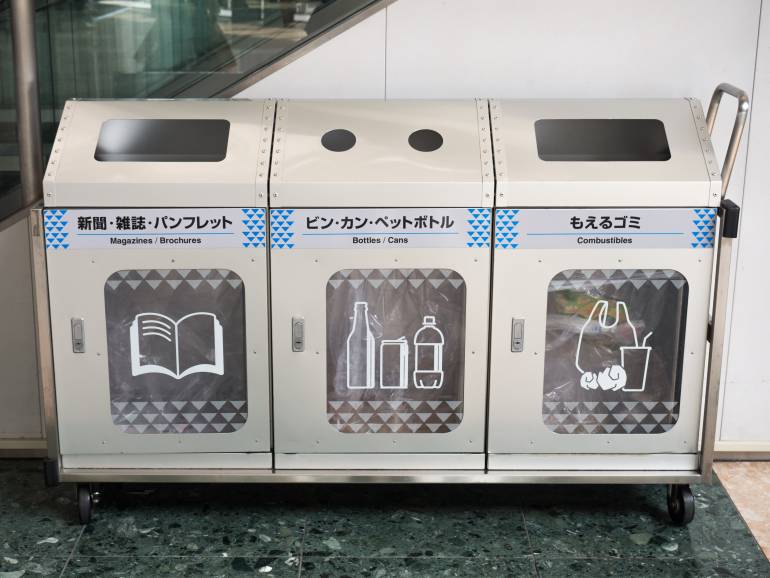
General littering is banned too. The ordinance allows a fine for it in certain districts, including around Akihabara and Tokyo Station, when it seriously harms the local environment, but the fine figures the ward publishes are all for smoking.
Heading that way? Here are our favorite things to do in Akihabara.
Ikebukuro, Ginza, Roppongi, Asakusa, and Ueno
Ikebukuro (Toshima Ward)
Littering is banned on roads, in parks and squares, and in stations. Around the east and west exits of Ikebukuro Station, it carries a criminal fine of up to ¥20,000, though as in Shinjuku, nobody collects it on the street. Smoking on the street is banned except at designated ashtray points, though patrol staff give warnings rather than fines.
Ginza and Nihonbashi (Chūō Ward)
Littering and smoking while walking are banned across the ward. Though the ward ordinance has no fine, patrol staff go around every day giving warnings.
Roppongi and Shimbashi (Minato Ward)
Littering in public places is banned, though the ordinance sets no penalty. Smoking outdoors in public places is only allowed at designated smoking spots.
Asakusa and Ueno (Taitō Ward)
Littering is banned, though the ward ordinance has no penalty. Patrolling “manner instructors” do give warnings, however. Taitō also bans smoking outdoors in public places from 7–9 a.m. every day, except at designated smoking spots.
Where can you throw things away?
Public trash cans may be few and far between, but you do have options.
Convenience stores
Some stores have no bins, and many keep them inside, where staff can keep an eye on the sorting. If you bought your snack there, it’s the natural place to get rid of the packaging. If you bought it elsewhere, think twice though.
Shop bins in Shibuya, Harajuku, and Ebisu
Since April 2026, shops selling food and drink in central Shibuya, Harajuku, and Ebisu have had to put a bin near the entrance for packaging from what they sell. That includes convenience stores, cafés, fast-food places, and crêpe and kebab stands.
About 91% of the shops the ward checked had one in place by the end of July 2026, according to its preliminary count. The bin is for that shop’s own packaging, though, not your general trash.
Vending machine trash boxes
The boxes next to vending machines are recycling boxes for empty bottles and cans, nothing else. Japan’s soft-drink association says 30–50% of what goes into them is general trash, not empty bottles and cans. Gross.
Also: containers with liquid left in them don’t belong there either, so finish your drink first.
Your hotel
This is the simplest option of all. Carry a small bag during the day and empty it when you get back. It’s very satisfying.
Designated smoking areas
If you smoke, the same logic applies to your cigarette butts: they belong in the ashtrays at designated smoking areas, not on the ground. Most of the wards covered above run these, often near major stations.
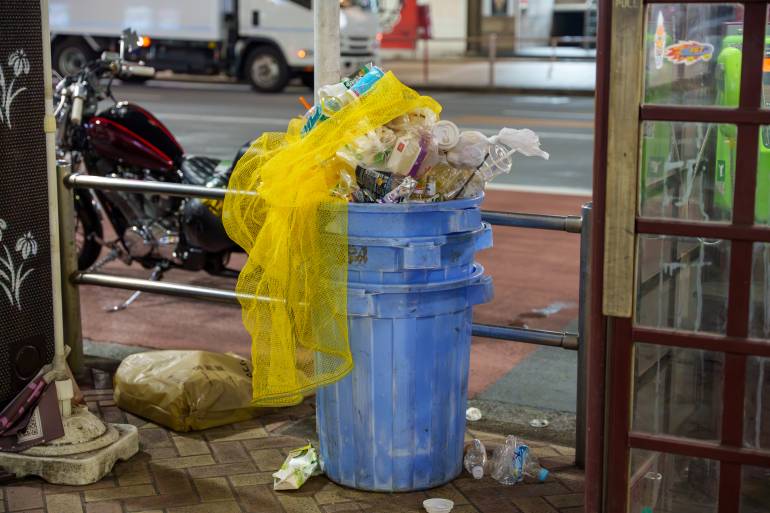
Why are there so few bins?
Security is part of the story, mostly in stations. The day after the 1995 sarin attack on the subway, the subway operator (now Tokyo Metro) cleared the bins out of all its stations.
JR East later started switching to see-through bins so staff could spot anything suspicious, Tokyo Metro removed its station bins altogether in 2022, and JR East has shut station bins during international summits as recently as 2023. For street bins, the wards give more practical reasons.
Shinjuku, with help from local shopping associations and businesses, put about 300 street bins around Shinjuku and Takadanobaba stations between 1997 and 1999. By 2004 it had removed them all, after complaints about the smell, trash scattered around the bins, and people dumping household and business waste in them. The ward says any new bins in busy areas would need a system that keeps them properly used.
Shibuya has long told people to take their own trash home, and it says paying to dispose of visitors’ trash would leave residents footing much of the bill.
Some wards are now trying again, though. Chiyoda plans to start using 10 solar-powered smart bins along Akihabara’s Chūō Dōri Avenue and around Akihabara Station in early November 2026, and Shibuya plans to put public bins around Shibuya Station by March 2027. The Tokyo government says it’s supporting smart-bin installations, and the accommodation tax added to hotel bills helps fund its anti-litter programs.
Will Tokyo bring in citywide rules?
Quite possibly, but not before 2028. In August 2026, Tokyo’s governor asked the city’s waste advisory council how to tackle litter in nightlife districts, tourist areas, and along riverbanks.
Whether to bring in rules or fines across Tokyo is one of the questions it’s looking at, along with whether any new rules should cover the whole city or only certain areas. An interim summary is due around spring 2027 and a final report around summer 2027.
Nothing is final yet, but Governor Yuriko Koike told the Tokyo Metropolitan Assembly on September 18 that the city is considering measures “including an ordinance.” The Yomiuri and Nikkei newspapers have both reported that Tokyo is aiming for a littering ordinance to take effect in fiscal 2028 (April 2028 to March 2029), possibly with fines of a few thousand yen collected on the spot.
Ward by ward at a glance
| Ward (main areas) | Ward littering fine | Paid on the spot? | Ward street-smoking fine |
|---|---|---|---|
| Shibuya (Shibuya, Harajuku, Ebisu) | ¥2,000, whole ward | Yes | ¥2,000 |
| Shinjuku (Shinjuku, Kabukichō, Takadanobaba) | Up to ¥20,000, three priority areas only | No | None |
| Chiyoda (Akihabara, Marunouchi) | ¥2,000 for dropped cigarette butts, whole ward; other litter only in some districts, in serious cases | Yes, or by payment slip | ¥2,000, on the spot or by slip |
| Toshima (Ikebukuro) | Up to ¥20,000, Ikebukuro Station area only | No | None |
| Chūō (Ginza, Nihonbashi) | None | — | None |
| Minato (Roppongi, Shimbashi) | None | — | None |
| Taitō (Asakusa, Ueno) | None | — | None |
Remember, “None” only means there’s no ward fine. Littering is still an offense under national law everywhere in Japan.
Note: The official pages linked in this article are in Japanese.
While we do our best to ensure it’s correct, information is subject to change.