
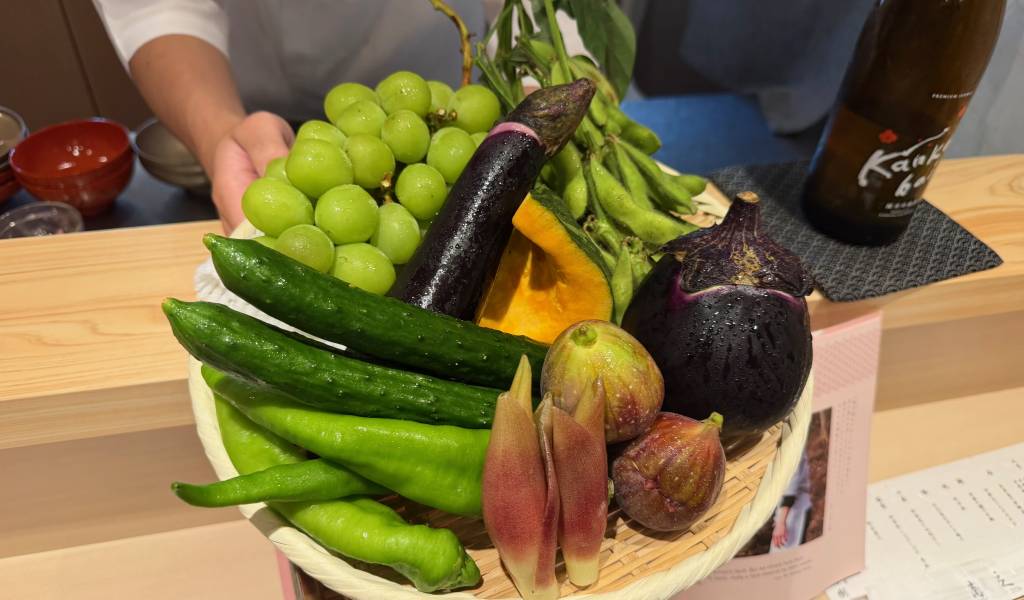
 Written by Aarohi
Kaiseki — Japanese haute cuisine — can be intimidating. There are unfamiliar ingredients, mysterious jellies, and intricately arranged dishes so sculptural they often seem better suited to a museum display than your dinner plate.
Ise Sueyoshi, an intimate restaurant in Tokyo’s Nishiazabu neighborhood, breaks down the art and science of kaiseki in a way that is engaging and accessible — including for vegan, vegetarian, and gluten-free diners.
What is Ise Sueyoshi?
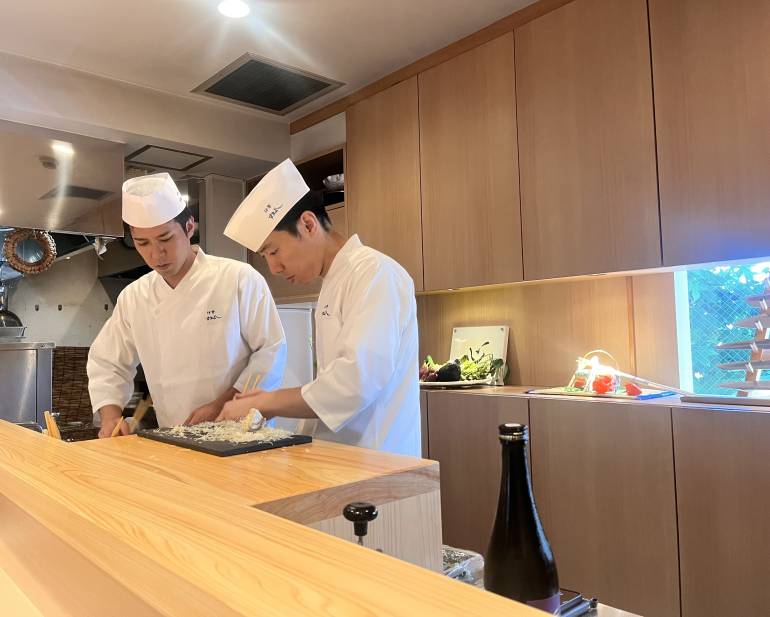
Ise Sueyoshi is an upscale kaiseki restaurant tucked away on the third floor of a building in Nishiazabu, between Hiroo and Roppongi. The restaurant serves a monthly changing kaiseki course, with English guidance available throughout the experience.
Owner-chef Yuuki Tanaka’s relationship with kaiseki started unusually early. He began cooking when he was just 4 years old, and cooking is the family trade: his father owns a kaiseki restaurant in Ise, Mie Prefecture. Chef Tanaka later formally studied cooking and spent a year in Canada, an experience that helped shape the international outlook behind Ise Sueyoshi.
During his time abroad, Tanaka realized that even many people working in food knew relatively little about kaiseki.
“I want to reach people with kaiseki,” he told us. “I want to show the attractiveness of kaiseki to people from all over the world.”
That idea eventually became central to Ise Sueyoshi, which has now been operating for more than 11 years.
As an homage to his hometown, Tanaka focuses heavily on ingredients from Mie Prefecture, including Ise ebi or Japanese spiny lobster, tuna, and beef. And the connection goes further than simply putting Mie produce on the menu — he has built deep relationships with farmers, fishermen, and other producers.
One of our favorite details was a beautifully produced book displayed throughout the meal. It documents Tanaka’s relationship with the region and introduces many of the farmers and producers he works with. The explanations are remarkably detailed without feeling academic, and great to browse while you savor and sip.
The food
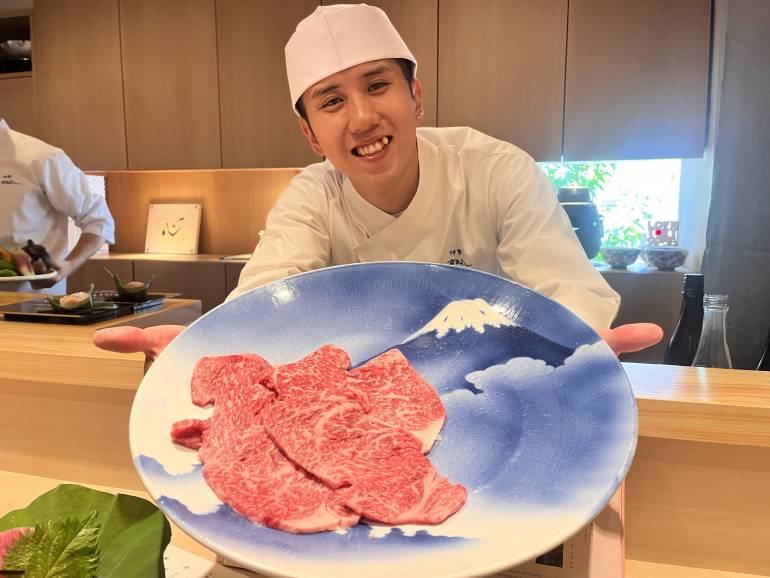
One of the defining characteristics of kaiseki is seasonality. The menu at Ise Sueyoshi changes every month, allowing the kitchen to work with ingredients at their peak — fresh, sweet, and succulent as can be — and to reflect the particular moment in the Japanese calendar.
Additionally, we found Ise Sueyoshi’s approach to dietary restrictions to be creative and refreshing.
Tanaka says the restaurant has spent the past eight or nine years gradually developing its vegan and gluten-free cooking.
“Usukuchi (light) soy sauce, for example, which is used in kaiseki, is fundamentally not gluten-free,” Tanaka explains, “So, bit by bit, we have been adapting and changing the courses to cater to all kinds of guests.”
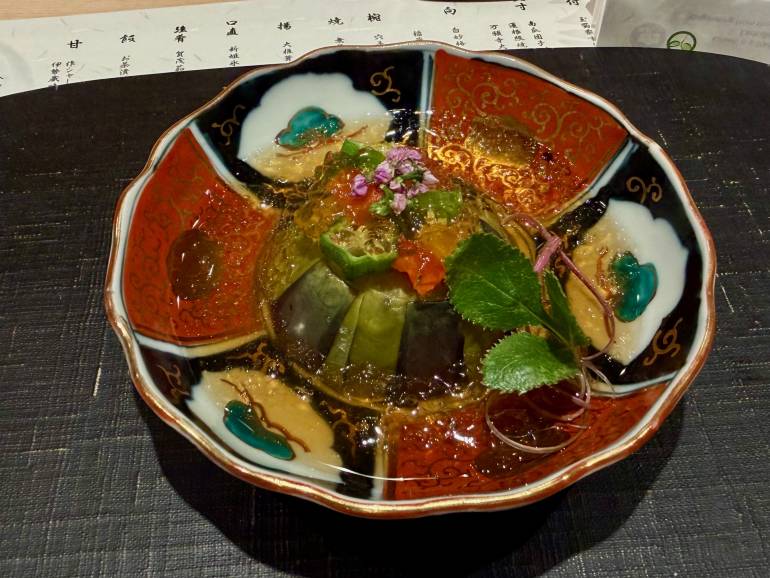
For vegan diners, the kitchen uses ingredients such as eggplant and tofu to reinterpret courses that might traditionally rely on seafood, meat or animal-based dashi.
What impressed us most was that the vegan meal did not feel like a separate, simplified menu. We tried the regular and vegan courses side by side, and the vegan version largely mirrored the progression and presentation of the standard meal.
Note: The restaurant currently asks guests requiring vegetarian, vegan, flour-free or gluten-free meals to reserve at least five days in advance.
Vegetarian and vegan adaptations do not carry an additional fee. For diners who need strict gluten-free preparation, there is a ¥2,000-per-person supplement; regular soy sauce is omitted, and if the course includes fried food, separate wheat-free batter and frying oil are used.
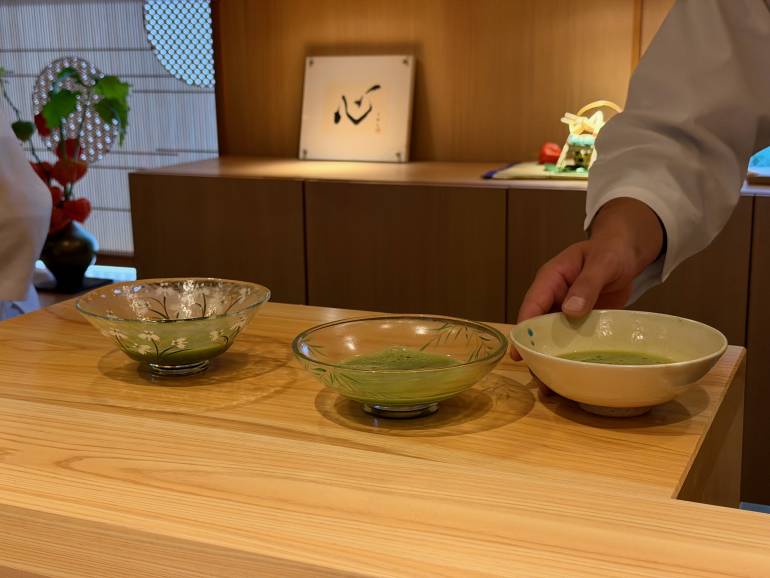
Ending the meal with matcha was also a lovely touch — with a little bit of gentle matcha-drinking etiquette included. The matcha, too, is sourced from Mie.
The drinks
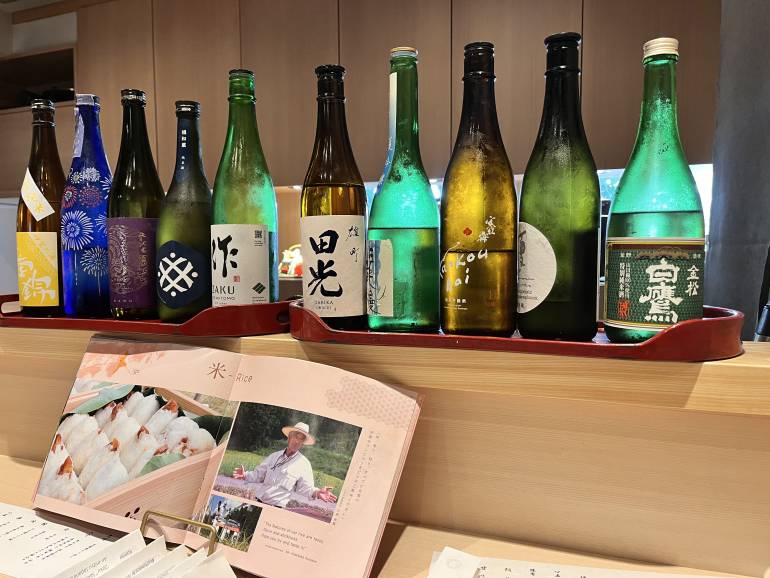
The drinks selection is extensive, but the sake pairing — featuring various premium sake from Mie — is the natural choice if you want to go all-in on the experience. The prefecture is one of only a handful of regions in Japan recognized with a Geographical Indication for sake.
The current pairing is ¥8,000 per person and includes around 9-11 small servings selected to accompany the individual dishes.
Our experience
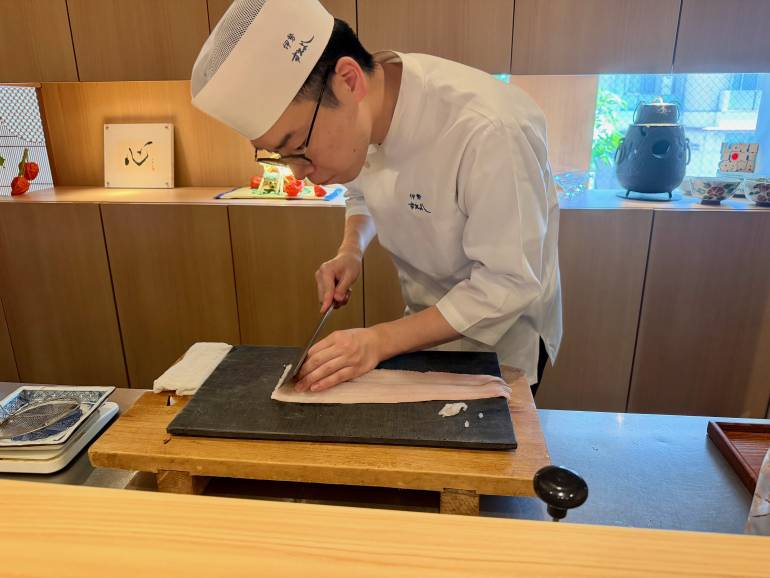
We thoroughly enjoyed our experience at Ise Sueyoshi. We felt completely taken care of throughout the meal, thanks to the personable service and thought the venue would be excellent for a special occasion.
For anyone curious about kaiseki but worried that the experience might feel overly formal or difficult to understand, Ise Sueyoshi is a particularly good introduction. It preserves the intricacy, seasonality and ceremony that make kaiseki special while giving plenty of explanation to keep you engaged.
What to know before you visit Ise Sueyoshi
Do you need reservations for Ise Sueyoshi?
Yes. Ise Sueyoshi is a small restaurant with limited seating, and reservations are required.
You select your kaiseki course and seating type when booking via TableCheck. The standard full kaiseki course is currently ¥26,000 per person including service and tax, with both chef’s-table and private-room options listed.
If you require a vegetarian, vegan, flour-free or gluten-free meal, make sure to select the appropriate option when reserving and book at least five days ahead. Guests with other allergies or dietary restrictions should provide specific details with their reservation.
Note: There is no separate children’s course. The chef’s table is for guests aged 18 and over. Children aged 6 to 17 may dine in the private room with advance notice and are served the same course as adults. Preschool-age children are not permitted.
Service is coordinated so diners begin together, and arrivals more than 15 minutes after the reservation time are treated as cancellations.
- 0.8 km from Hirō Station Hibiya Line (H3)
- 0.9 km from Nogizaka Station Chiyoda Line (C5)
- 0.9 km from Roppongi Station Hibiya Line (H4)Oedo Line (E23)
Get the Top Tokyo Cheapo hacks in your inbox.
Nearby restaurants and cafes
-

French Kitchen
A smart restaurant located in the Grand Hyatt Hotel, they offer a breakfast buffet, afternoon teas and dinner. Located …
-

Gorigori Burger Taproom
Gorigori Burger is a great-value beer and burger joint located down an alley opposite Roppongi Hills. The …
-

Chinese cafe Eight Roppongi
The Roppongi branch of Chinese Cafe Eight is located just across the road from the Roppongi Hills Grand Hyatt. In …
-

Gonpachi Nishi Azabu
Located in Nishi-Azabu, just down the hill from Roppongi Hills, the Gonpachi Nishiazabu branch is allegedly the …
-

Le Bourguignon
A French restaurant in Nishi-Azabu with 1 Michelin star, and lunch sets from . There is a small terrace at the front of …