 Written by Aarohi
Ueno Station has an unmistakable retro charm. You’ll see every kind of traveler here: commuters cutting through with dead-eyed efficiency, day-trippers heading north, and tourists fatigued from the area’s many museums, wheeling off suitcases to destinations untold. It’s one of the most important stations in Tokyo, and you’ll want to get familiar with it sooner rather than later. Read ahead to hit the ground running.
Pro tip: If you’re looking for stuff to do in the area, check out our list of top things to do in Ueno.
Ueno Station: the basics
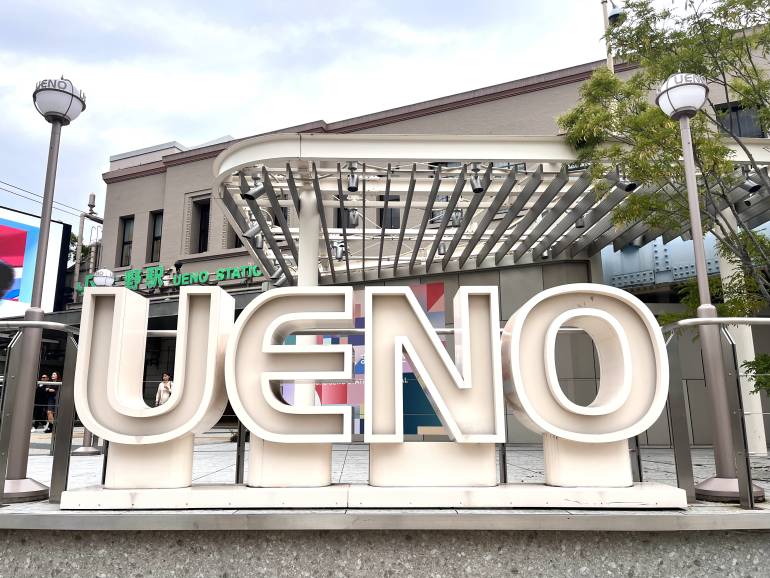
Compared to stations like Shinjuku and Tokyo, Ueno Station is more compact and easier to navigate. It is, however, still quite large.
Layout
Ueno Station is spread across several levels, with JR lines, Shinkansen (bullet train) platforms, and Tokyo Metro lines using different parts of the station.
- B4: Shinkansen platforms for services heading toward northern Japan, including the Tōhoku, Jōetsu, and Hokuriku Shinkansen.
- B3: The Shinkansen concourse, reached by escalator from the first floor. Note that the Shinkansen transfer gate itself is on the first floor, inside the JR paid area just beyond the Central Gate.
- Tokyo Metro levels: The Ginza Line and Hibiya Line are in the separate Tokyo Metro Ueno Station. Ticket gates and machines are on B1, with platforms on B2.
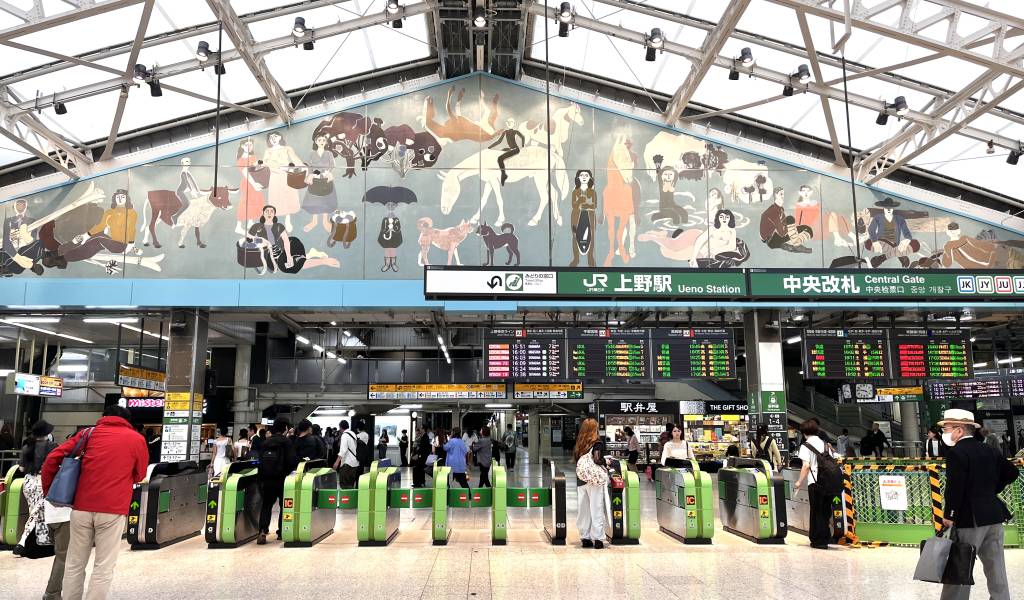
- First floor: Main JR station concourse, including the Central Gate and Asakusa Exit (the Shinobazu Gate is on a mezzanine just above), plus the ground-level terminal platforms (13–17) used by Utsunomiya Line, Takasaki Line, and Jōban Line trains that start at Ueno. This is also where you’ll find many lockers, shops, and station services.
- Second floor: Elevated JR platforms (1–12) and transfer routes for lines including the Yamanote Line, Keihin-Tōhoku Line, Ueno-Tokyo Line, Takasaki Line, Utsunomiya Line, and Jōban Line.
- Third floor: Park Gate area, giving easy access to Ueno Park, the museums, and Ueno Zoo.
What train lines stop here?
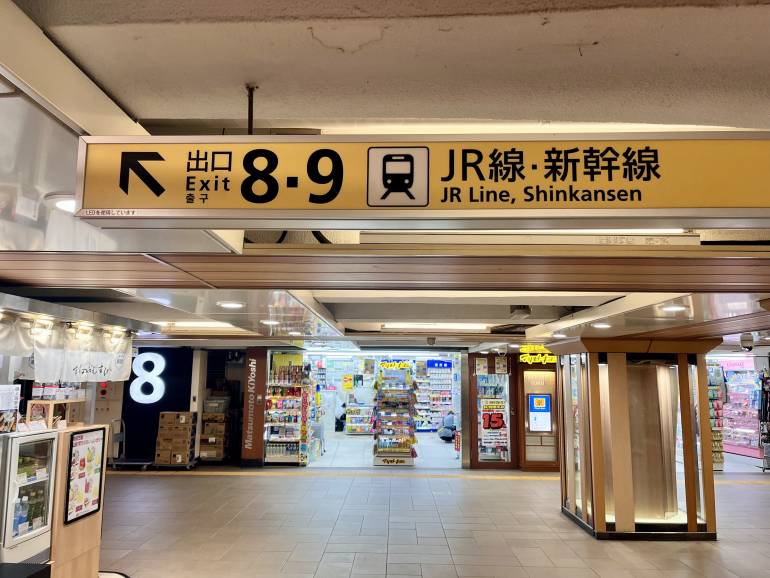
The following train lines stop at Ueno Station:
- JR lines: Yamanote Line, Keihin-Tōhoku Line, Ueno-Tokyo Line, Utsunomiya Line, Takasaki Line, and Jōban Line.
- JR limited express services: Hitachi and Tokiwa on the Jōban Line, plus Kusatsu-Shima and Akagi (weekdays only) services toward Gunma.
- Tokyo Metro lines: Ginza Line and Hibiya Line.
- Shinkansen: Tōhoku, Yamagata, Akita, Hokkaidō, Jōetsu, and Hokuriku Shinkansen.
Keisei-Ueno Station
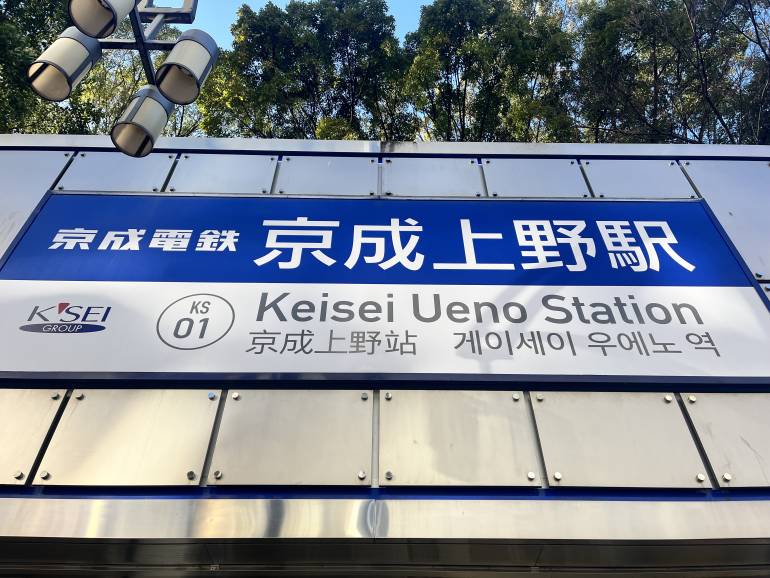
Keisei-Ueno Station is a separate station about a 5-minute walk from JR Ueno Station — leave via the Shinobazu Exit and follow the signs. This is where you’ll find Keisei Line services, including the Skyliner to and from Narita Airport.
What bus services stop here?
Many buses depart from Ueno Station. They include:
- Highway buses: Long-distance buses leave from several separate stops around the station — including the Iriya Exit, the Ueno Ekimae stop on the east side, and the Keisei-Ueno Station stop — so check your ticket for the exact boarding point. Routes include an overnight bus to Kyoto (from the Keisei-Ueno stop) and one daily round trip to Kawaguchiko and the Fuji area (from the Iriya Exit). There is no direct airport bus from Ueno: for Haneda Airport, take the train via Hamamatsuchō (Tokyo Monorail) or Shinagawa (Keikyū Line), and for Narita, use the Skyliner from Keisei-Ueno.
- Local buses: Toei buses use stops on both sides of the station — along the main road on the east (Asakusa Exit) side, and at the Ueno Park Yamashita stop on the west side near Keisei-Ueno Station — connecting the area with destinations across Tokyo.
- Sightseeing buses: Ueno Station is served by several sightseeing-oriented routes, including the Skytree Shuttle to Asakusa and Tokyo Skytree Town (weekends and holidays only, from the Park Exit), Taitō Ward’s Megurin community loop bus (¥100 a ride, with stops at the Iriya and Park exits), and the hop-on, hop-off Sky Hop Bus, which stops on the east side of the station.
Facilities
Since Ueno Station is an interconnected station hub, there are many facilities across its multiple buildings and shopping areas. You’ll find toilets (including accessible ones), elevators, coin lockers, and various information desks.
There are also ATMs located throughout the station. Those in convenience stores tend to be the best for international cards (find out more about getting yen in Japan).
Lockers
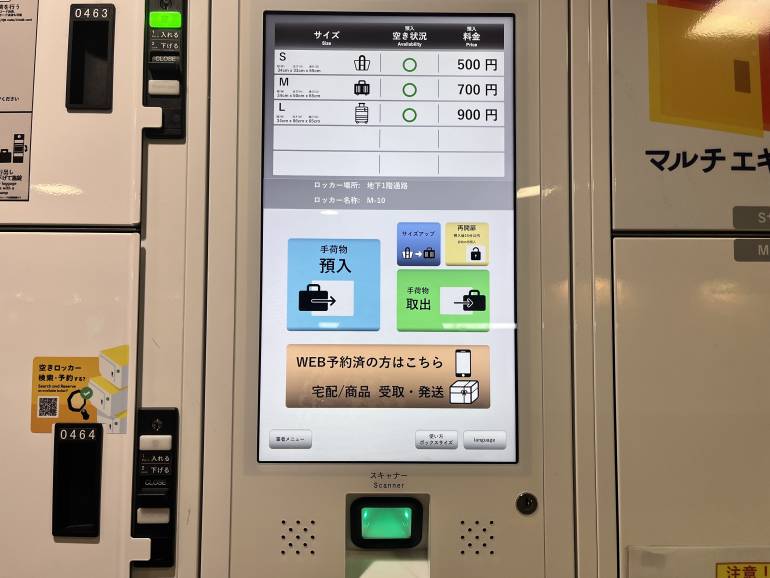
Lockers are easy to find at Ueno Station, especially around the main JR concourse areas and near the larger exits. One of the most useful spots is by the Asakusa Exit, where there is a sizeable locker area just outside the JR ticket gates. You’ll also find lockers scattered around the station, including inside the paid area, so it’s worth checking the station map if the first bank you see is full.
Most lockers take IC cards such as Suica or Pasmo, and some are cashless only. Prices generally start around ¥400 for a small locker, with a handful of extra-small ones at ¥300. Sizes vary from small bags to suitcase-friendly lockers, but large lockers can disappear quickly during cherry-blossom season, weekends, and holiday periods. If they’re all full, see our guide to luggage storage in Tokyo for other options nearby.
Ticket offices and service desks
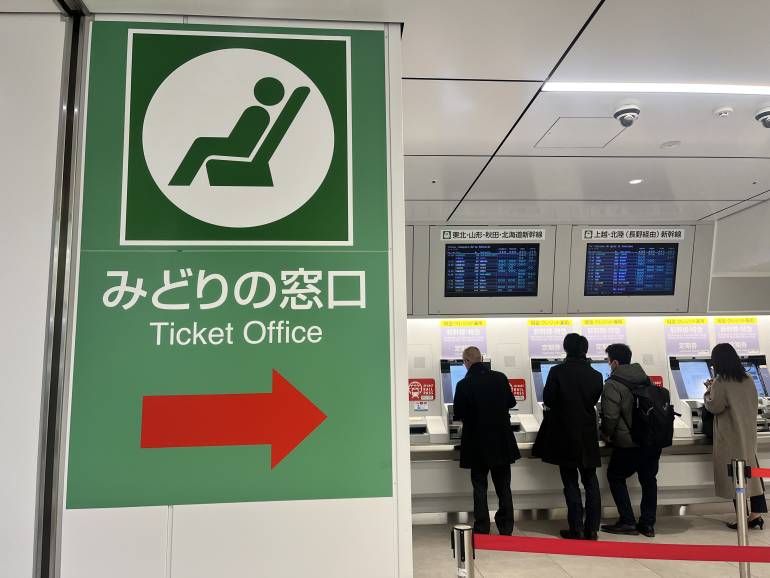
The main JR ticket office (Midori no Madoguchi, or “green window”) is located near the Central Ticket Gate. If you’re using Ueno for longer-distance travel, including Shinkansen services, this is the place to make seat reservations, buy JR tickets or ask about routes.
If you’re looking for information about the Ueno area, head to Tokyo Metro’s tourist information counter inside the Metro station (open 9 a.m. to 5 p.m.). English-speaking staff can provide guidance on sightseeing spots and how to get to them.
There is also a JR East Travel Service Center in front of the Central Ticket Gate — exit the gate and it is right in front of you. Staff handle JR East passes and tickets, including the JR Pass and JR East Pass, ticket pick-up for some online reservations, and tourist information for Ueno, East Japan, and the Hokuriku area. Opening hours are 8 a.m. to 6 p.m. daily.
Catching the Shinkansen at Ueno Station
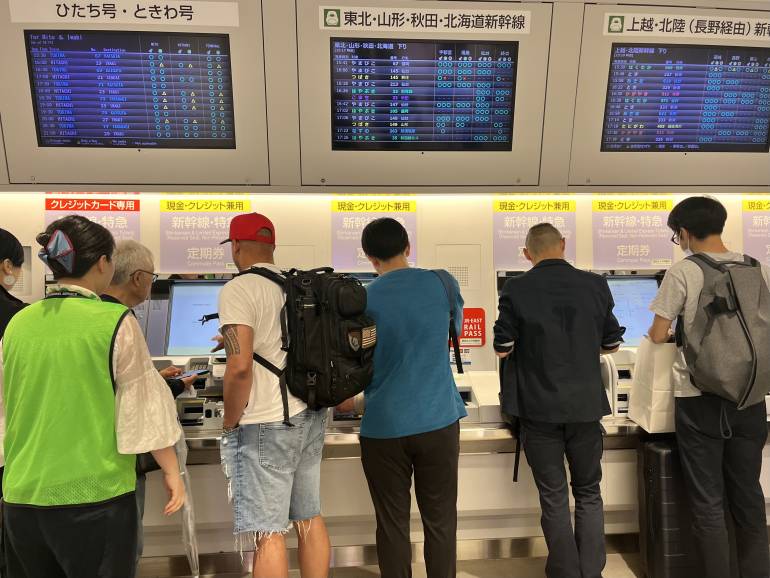
The Shinkansen goes through Ueno Station, with services on the Tōhoku, Yamagata, Akita, Hokkaidō, Jōetsu and Hokuriku Shinkansen lines. That makes it a handy departure point if you’re heading north to places like Kanazawa or Nozawa Onsen.
That said, we would usually choose Tokyo Station for the Shinkansen if both options are equally convenient to get to. Tokyo Station is the starting point for many services, which means boarding feels a little less rushed. Ueno’s Shinkansen platforms are also deep underground, so give yourself extra time to get down there, especially if you have luggage.
Ueno can still be the better choice depending on where you’re staying. If your hotel is in Ueno, Asakusa, Yanaka, Nippori, or around the northeast side of Tokyo, leaving from Ueno can save you the hassle of crossing town to Tokyo Station. It is especially useful for early departures, families with bags or anyone already using the Yamanote, Keihin-Tōhoku, Ginza, or Hibiya lines to reach the station.
Just note that not every Shinkansen service stops at Ueno — some of the fastest Hayabusa and Kagayaki trains run straight through — so always check your ticket carefully before heading there. If your reserved train leaves from Tokyo Station only, you’ll need to board there instead.
Important: The Tōkaidō Shinkansen, the bullet train that goes from Tokyo to Kyoto and Osaka, does not stop at Ueno Station. You’ll want to go to Shinagawa Station instead (or Tokyo Station).
Things to do in and around Ueno Station
You wouldn’t expect a train station to have much going on, but there are plenty of places to shop, dine, and browse — more on that below.
If you are ready to leave the station and start exploring, that’s easy to do as well. Ueno Station gives you seamless access to popular spots like Ueno Park, the famously rowdy Ameyoko market, and a collection of the city’s best museums. It’s also easy to adventure forth to Asakusa.
Shopping at Ueno Station
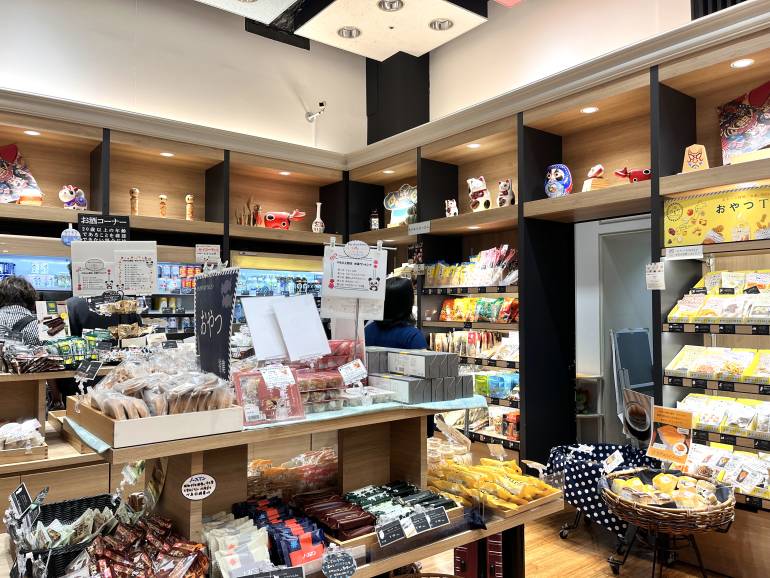
There is no shortage of shops at Ueno Station. Within and around the station complex are several shopping centers, including Atré and Ecute inside the station building, and Marui just across the road from the Central Gate.
Just outside the Central Gate, on the main concourse, there’s also a shop we highly recommend for souvenirs: Nomono, which sells mainly edible (and drinkable) gifts from the various prefectures that JR East trains pass through.
This includes sake from rice-rich Niigata Prefecture, garlicky goods from Aomori Prefecture, 100% fruit juices from Nagano Prefecture and Yamagata Prefecture, and an absolute smorgasbord of rice crackers from, well, everywhere in Japan that’s north of Tokyo. It’s a great place to shop on your way in or out.
Entertainment at Ueno Station
- Go museum-hopping: Ueno is Tokyo’s premier museum-hopping neighborhood. Step out of the Park Exit and you are almost immediately in Ueno Park, where you can drift between big-name institutions like the Tokyo National Museum, the National Museum of Western Art, the Tokyo Metropolitan Art Museum, and the National Museum of Nature and Science.
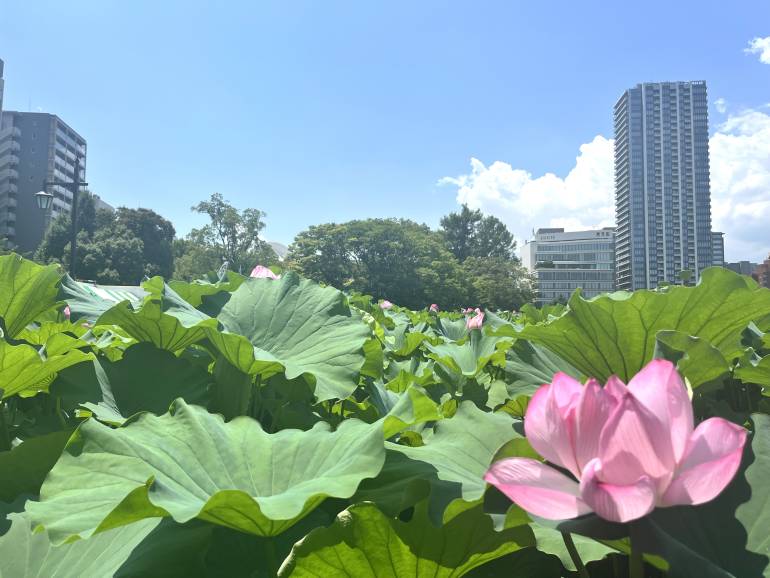
- Power up on flowers: In spring, Ueno Park becomes one of Tokyo’s classic cherry-blossom spots. The central avenue fills with pale pink blooms, food stalls and a cheerful amount of chaos, especially around late March and early April. In summer, head down toward Shinobazu Pond, where lotus leaves float on the water like large green platters. Timing is important, though: the pond is especially atmospheric in the early morning, when the flowers are still open.
- See some art: Near the Asakusa Exit, Creative Hub Ueno “es” is a small free gallery created by JR East and Tokyo University of the Arts inside a renovated former police box. It focuses on work by students and graduates of the Tokyo University of the Arts, so the works are more experimental. Entry is free, opening hours are generally 11 a.m. to 7 p.m. with last entry at 6:45 p.m., and it is usually closed on Mondays.
Food and drink
Similar to Tokyo Station, Ueno Station is full of places to eat. You’ll find ramen, pork cutlet, and set meals here — no need to leave the station to eat well.
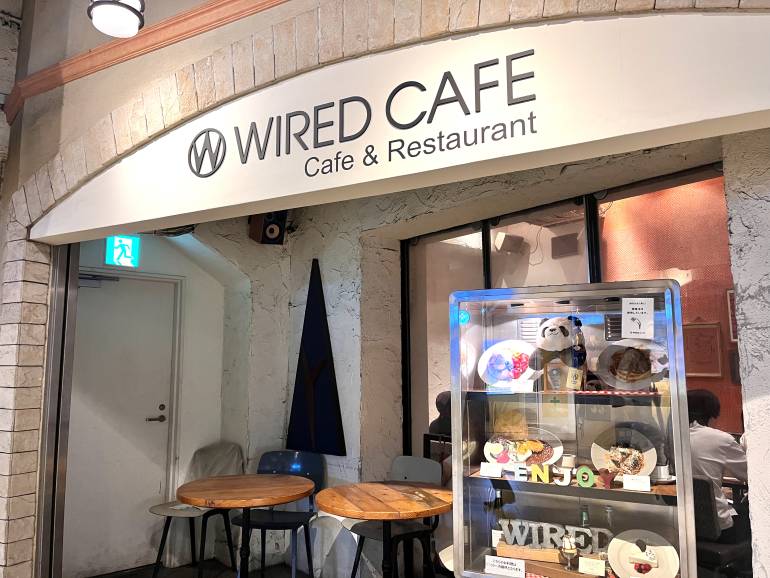
One of our personal favorite spots inside the station is Wired Cafe, in the basement of Atré Ueno East, right by the Tokyo Metro exit. This is a convenient all-day spot that serves food as well as coffee (with an oat milk option), tea, and even chocolate-based drinks. They also have a decadent matcha and coconut latte.
With free Wi-Fi and outlets at the counter seats, this is truly a unicorn — we almost didn’t want to share it. The nearest toilet is outside the café, an elevator ride away.
Another spot worth checking out for matcha and a little treat is Yanagi Chaya, on the second floor of Ecute Ueno by the Park Gate. This is a temple to all things matcha, ranging from the ever-popular matcha tiramisu to parfaits and drinks. There are also some savory options here, such as noodle bowls.
Pro tip: To eat like a local beyond the station, book the Hidden Taverns and Ramen in Ueno tour — a guided crawl of neighborhood taverns with a ramen stop, and one of the best-reviewed food tours in Tokyo.
Frequently asked questions
Are Ueno Station and Keisei-Ueno Station the same?
No, they are two different stations, a few minutes’ walk from each other. Ueno is a major hub, and certain Shinkansen lines pass through it. In contrast, Keisei-Ueno is where to go to catch the Skyliner directly to Narita Airport.
Is Ueno a good place to stay?
Yes. Ueno is a good place to stay in Tokyo, especially if you’re keen on museums and want easy access to areas such as Asakusa and Ginza. It’s also one of the more budget-friendly bases in the city, with plenty of business hotels, hostels, and capsule hotels — though, as everywhere in Tokyo, rates climb during peak seasons like cherry blossom time. See our guide to where to stay in Tokyo for more.
While we do our best to ensure it’s correct, information is subject to change.