Written by Mareike Dornhege
Toyosu Fish Market — Tokyo’s shiny, new(ish) fish market — has replaced its predecessor Tsukiji as the city’s top destination for seafood fans.
But does it live up to its reputation? And if you can only visit one, should it be Toyosu or Tsukiji? Here’s everything you need to know about it so you can decide for yourself.
Toyosu Fish Market: The basics
5 a.m. to 5 p.m.Closed Sundays, most Wednesdays, and national holidays
Entry is free

Toyosu Market opened in 2018, replacing the old city-run wholesale market — known as the “inner market” — at Tsukiji Fish Market. The new Toyosu Market is in Toyosu, an island of reclaimed land in Tokyo’s Kōtō Ward.
The market is made up of three interconnected buildings — the “Fisheries Intermediate Wholesale Market Building”, the “Management Facilities Building”, and the “Fruit and Vegetables Building”. The whole area is about twice the size of the space at Tsukiji, at 40.7ha vs. 23.1ha. So yes, Tokyo still has the biggest fish market in the world. Many of the vendors, shop keepers, and restaurants who used to be at Tsukiji Market also moved to Toyosu Market or opened branches there.
Pro tip: The “outer market” part of Tsukiji still exists. And there is a lot to see (and eat) in the area. Plus, there are some great Tsukiji Fish Market tours available for an insider’s view.
Which is better Toyosu or Tsukji Fish Market?
The experience at Toyosu is very different from the lively, messy, but also charming and authentic Tsukiji. Toyosu Fish Market has a fairly sterile atmosphere and only certain, clearly-marked areas are accessible to visitors.
From the Intermediate Wholesale Building, you have a very limited view of some of the market passages from large windows. Tourists are not allowed on the market floor, and no, not after 10 or 11 a.m. or anytime either. But you can see turret trucks on display (photo opportunity!) and find some cool information on the seasonal fish of Toyosu/Tsukiji.
In general, the whole Toyosu experience is well designed for visitors: there are a lot of info boards, signs, and maps everywhere. All the areas that vistors can enter are clearly marked. It is nice, clean, and organized, which some people might prefer to the chaos of Tsukiji.

Tsukiji’s old shrine stayed put, but a new shrine has been erected facing the waterfront. It’s called Uogashi Suijinja, which means something like “shrine for a fish market on the shore.”
How do I get to Toyosu Market?

Shijōmae Station on the Yurikamome Line is the nearest station to Toyosu Market. If you’re traveling to Toyosu Fish Market from central Tokyo, you should catch the Yurikamome from Shimbashi Station, which has connections to multiple JR and Tokyo Metro lines.
When you arrive at Shijōmae Station, there are plenty of signs pointing the way to the market. The station building and the Tokyo fish market building are connected by covered passageway, so it’s good for all weather conditions.
How to get to the Toyosu tuna auction
Those who want to see the Tokyo tuna auction will need to find another way to get to the fish market. Trains to Toyosu Market only start running from 5:15 a.m. — that’s if you catch the Yurikamome line from Toyosu. Coming from Shimbashi, the first train to the market doesn’t depart until 5:45 a.m. — too late for the tuna auction.
There really isn’t anywhere to hang out all night near the market, so you’ll have to take a taxi to get to the market early enough for the auction. Ask the taxi driver to drop you off at Shijōmae Station, as they aren’t allowed to drop people off in front of the fish market gates (so as not to block the busy morning workflow).
The tuna auction at Toyosu

If you want to see the famed tuna auction in Tokyo, slots for the best viewing platform are very limited. Here’s what you need to know.
Where is the tuna auction held?
The tuna auction is held in the Fisheries Intermediate Wholesale Building. Walking from Shijōmae Station, your first stop will be an information area that tells you about the market in English and Japanese, through posters.
After an area with shops, you’ll enter another information room that showcases a model of the largest bluefin tuna ever sold at Tsukiji, weighing almost 500kg. That was in 1986; today, such a huge catch would be unlikely to happen due to the tuna’s extremely fragile status.
From this room, a corridor leads to the tuna auction area. You’ll find yourself in a gallery one floor above the action — and all behind glass. The board that explains the buyers’ hand signs for the auction is helpful for understanding what’s happening below.

Fun fact: The tuna auction area has green floors, while all other areas have white floors. Why? Buyers determine the quality, and therefore price, of the fish by checking its red meat. Red stands out best against a green backdrop.
Beyond the gallery, there is a special observation deck on a lower floor. This offers the most intimate experience possible, as the glass does not extend to the ceiling, so you can hear the auction going on.
But — as it is open at the top — it may be rather chilly! The auction area is cooled down to almost zero degrees Celsius, so bring a sweater, even in summer. If you have a ticket to the deck (see below for details on how to get one), you can enter it via the elevator at the end of the upper-floor gallery.
What time does the tuna action start?
The tuna auction takes place daily from about 5:45 a.m. to 6:25 a.m. If you’re happy watching from the upper-floor observation windows, you don’t need to sign up beforehand. Just be there as early as possible and try to grab a good spot.
How to watch the tuna auction
The gallery opens to visitors from 5 a.m. and auction prep is already in full swing at that hour. However, the gallery is the B-grade option for viewing the tuna auction, and you might leave having seen nothing but a bunch of people’s heads. Though microphones transmit the auction sounds from below.

Access to the observation deck
You can watch the tuna auction in Tokyo for free, but you’ll need to enter a lottery to get tickets if you want the best view.The Toyosu tuna auction is best viewed from the special deck on the lower floor. Access to this deck is by lottery, with applications open for about a week each month, for a spot the following month. To apply, you head to the official page (available in English and Japanese) and follow the steps on screen.
If you can get your hands on tickets to watch the Tokyo tuna auction up close, here are a few things you should know:
- Only 100 people will be allowed onto the viewing deck each morning
- Meet Toyosu staff at the Promotional Corner at 5:30 a.m.
- You need to reserve in advance online
- Applications open during the first week of the month for the following month. For example, applications for the whole of July open the first week of June
- If there are more applicants than available spots, selections will take place by lottery
- You can still view the auction from the second-floor observation windows, without worrying about an application
- Don’t spend too much time at the fish market itself: Unless you’re going early to watch the tuna auction, there just isn’t that much to see at the market itself. Have a quick look around, grab some breakfast, and then head somewhere else nearby like teamLab Planets or Odaiba
- Book a tour for the tuna auction: If you have your heart set on seeing the tuna auction, book a tour with either Viator or Rakuten Travel Experiences to guarantee you get the best view
- Don’t feel pressured to spend a lot on sushi: We often say this with sushi and sashimi, but we’ll say it again — most people haven’t developed the palate to really tell the difference between fancy, top tier sushi and good quality mid-range sushi. So if that’s you, don’t feel like you need to blow your food budget on the best sushi available, an affordable alternative will be just as enjoyable
- Places
- Restaurants
More information about the tuna auction viewing process can be found on the Toyosu Market website, in English.
Submitting an application to see the tuna auction does not guarantee you a place on the lower-floor observation deck; it works on a lottery system, with the results communicated about a week after the submission period has ended. Be sure to bring along some ID; it’s necessary to access the deck.
When you head down to the observation deck, stay right, following the signs — the left side is reserved for press and officials. Keep your eyes peeled for “Language Co-talk Volunteers.” These friendly folk are happy to explain what’s happening in the tuna auction, in English.
Pro tip: Sign up for a tour on Viator or Rakuten Travel Experiences before or during the application window and the operator will apply for you.

How long does the tuna auction last?
The start of the Toyosu tuna auction is announced by the ringing of a bell. Depending on how many tuna there are to sell on the particular day you visit, it could all be over within 20 minutes, or last a full hour. There are several auctioneers and different auctions might happen simultaneously. The tuna auctioneers and buyers move around in small groups from batch to batch until everything is sold. They are followed by Toyosu Market workers who promptly slap “sold” tags on the fish. Both fresh and frozen tuna might be on sale.

Even if you can’t see the tuna auction when you visit the market, you should be able to watch the just-sold tuna being hoisted away on forklifts and turret trucks. This usually wraps up around 7 a.m.
Restaurants: Where to eat at Toyosu Market
Each of Toyosu Fish Market’s three buildings has at least some dining options. Of course a majority of the restaurants serve seafood, but there are some selling other Japanese and foreign cuisine, plus a few cafés. Because the seafood restaurants have close ties to the market, most of them open early (around 7 or 8 a.m.) and close at lunch time — if they haven’t already sold out for the day. So with that in mind, we recommend eating breakfast at Toyosu, not lunch.
For the best experience, choose a restaurant with an omakase (recommended) set. This will be made up of the chef’s recommendations for that day — guaranteeing fresh, high quality fish. You can get a nice mid-range omakase set for around ¥5,000 to ¥6,000. Of course, you can stretch that budget in both directions — seasonal sushi sets or seafood bowls start at around ¥2,000, while some of the high-class restaurants just have “market price” written next to their fanciest menu options.
Another thing to keep in mind, is that not all restaurants in Toyosu Fish Market accept credit cards or reservations. As is always the case in Japan, carry some cash. If you have a certain restaurant you want to eat at, check online to see if they take reservations.
Now, let’s get specfic and break down your options building-by-building.
Fisheries Intermediate Wholesale Market Building

The third floor of this building is Toyosu’s main restaurant area. That also means it’s one of the busiest areas. We recommend arriving early (well before 10 a.m.) and being prepared to line up if you want to dine at one of the more popular restaurants.
Besides seafood restaurants, there are other Japanese dishes on offer including tonkatsu (deep fried pork cutlets), gyu-don (beef rice bowls), and Japanese-style curry. Plus, there’s a Chinese restaurant, a Western-style restaurant, and two coffee shops. Oedo Sushi is a very popular spot here, with prices starting at about ¥2,500 for seafood bowls.
Pro tip: The entrance to the third floor is along the overpass.
Management Facilities Building

The next biggest selection of restaurants is on the third floor of the Management Facilities Building. Yes, there are sushi shops, but you’ll also find pizza, tempura, and a coffee shop among the offerings. Our top pick for this area is Ryu Sushi, which has good balance of quality and affordability. They have an omakase (recommended) set for ¥5,500, and they accept credit cards.

Fruit and Vegetable Building

The first floor of this building has a very small selection of restaurants. But notably, it’s home to Daiwa Sushi. This sushi joint has no written menu, so it is best to go with their omakase (recommended) set for ¥6,600.
The quality is excellent and they give you the option to replace any sushi you might not want to eat because you dislike it or because you have environmental concerns (think eel and other fish that are threatened). They speak a bit of English and some Chinese and are very accommodating to foreign visitors. Even better, they’re one of the few restaurants at Toyosu Market that take reservations.
Shopping at Toyosu
On the fourth floor of the Intermediate Seafood Wholesale Building, you’ll find over 100 retail shops. Their offerings range from sake and cheese to knives sharpened before your eyes, kitchen utensils, fruit, veg, and bentō boxes.
Souvenir suggestions include the fresh wasabi roots on offer, maybe as a set with a wasabi grater, or the ceramics at Ueda. They are reasonably priced for the quality of design and material that is on offer. Check it out in the North Aisle.

Other things to do at Toyosu Market
When you are done with the main attraction, the two fish market buildings, you have two options: Go up to the fifth floor roof deck or go see the fruit and veg market.
The rooftop

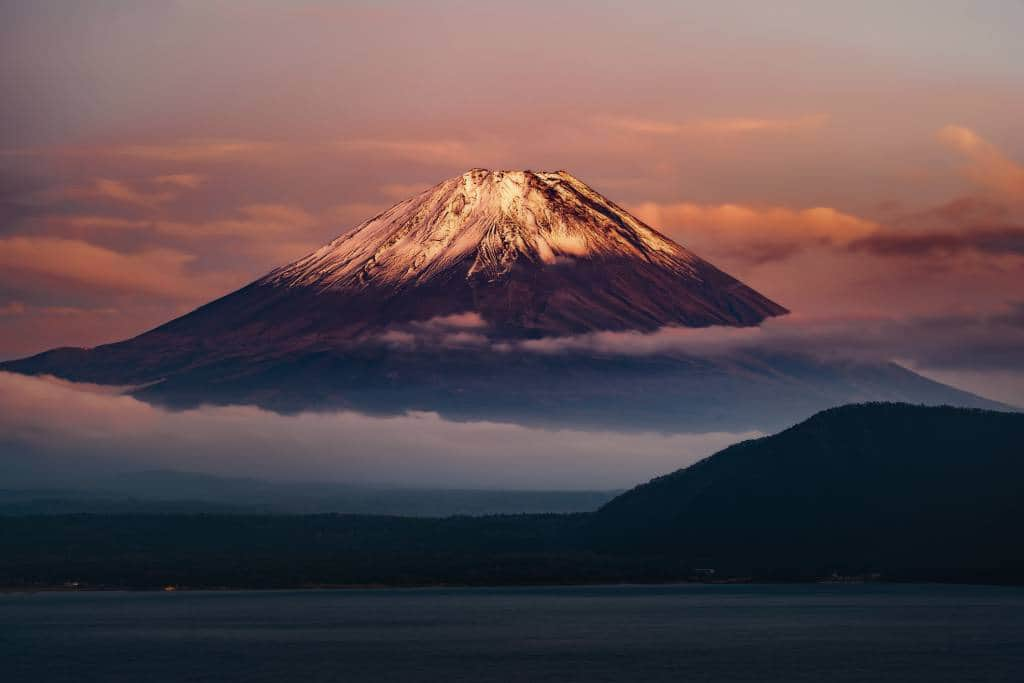
The rooftop can be accessed from elevators inside and outside the building, but these can get crowded. If possible, look for the staircase, which is a bit harder to find. The roof is pretty minimalistic in design, but it has grass and non-flowering bushes (so as not to attract any insects). There is no shade, but it offers a great view of Tokyo Bay and, on clear days in winter, of Mt Fuji.
You can sit on the grass, but food and drink is not allowed on the roof. Also, there is barely any signage, so don’t get lost! There is a big path down to the lower floors, which leads you back to the windows overlooking the sales area.
Toyosu fruit and vegetable market

If you haven’t had enough yet, you can also go and check out the fruit and veg wholesale area — just follow the English signs. A word of warning though: this isn’t the most exciting place, unless you love the sight of piles and piles of Styrofoam boxes. You will be walking along a windowed gallery that looks down onto the market activity below.
The best thing about this part of Toyosu is probably the handful of restaurants tucked away one level under the entrance. Take the stairs down as you exit the building and you can choose from udon, tempura, and arguably the best sushi at the market — Daiwa Sushi.
Tips for enjoying Toyosu Fish Market
Feeling overwhelmed? Here are our top tips for making the most of your trip to Toyosu Market.
What is there to do near Toyosu Fish Market?

While teamLab Borderless may have closed down in August, you can still visit teamLab Planets which is just down the road from Toyosu Fish Market.
More on teamLab Planets here.
You can also combine a visit to Toyosu Fish Market with a trip to nearby Odaiba, a shopping and entertainment district with a slightly tacky replica of the Statue of Liberty and views of the Rainbow Bridge.
In February 2024, a new spa and entertainment complex called Senkyaku Banrai opened across the road, as part of a project to make the area more lively and “give back” to the community.
Hotels near Toyosu Fish Market

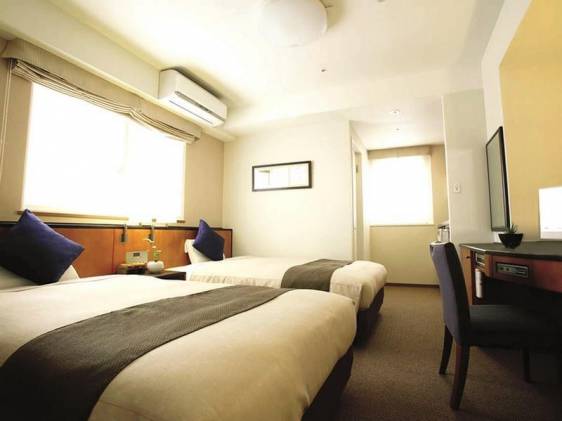
Several new hotels have opened up in the Toyosu area in recent years. We especially recommend staying in one if you plan to see the tuna auction. For one, you can sleep in a little — some of these hotels are just minutes away from the market on foot — plus you won’t have to fork out for an early morning taxi fare. Here are two of our favorite hotels near Toyosu Market.
La Vista Tokyo Bay: The closest hotel to the fish market
From ¥20,000Book here
La Vista Tokya Bay is a hotel right by Toyosu Fish Market that ticks a lot of boxes. Not only are the rooms spacious, but some also have city or sea views. The hotel itself has a buffet breakfast, a swimming pool, an open air bath, airport transfers, and much more to offer. We recommend this hotel for couple and family groups.
Hotel JAL City Tokyo Toyosu: A classy option within walking distance of the fish market
From ¥25,000Book here
Hotel JAL City Tokyo Toyosu is another great hotel option within walking distance of Toyosu Fish Market. Their rooms offer city views (and have coffee machines), and the hotel serves a solid breakfast buffet. There’s also an on-site restaurant, so you won’t have to journey far for a good meal.
What happened to the old Tsukiji Market?
Originally, Tsukiji’s wholesale market was slated to close its doors in November 2016. Then the move got pushed back. And back. And back some more. But the relocation happened at last, and the wholesale market officially reopened at Toyosu on October 11, 2018. Over 600 merchants made the move.
The “inner” part of Tsukiji Market (the wholesale market) closed for a couple of reasons: its facilities were old (it opened in 1935), and the layout inefficient. The government says this was hurting the market’s “image,” in addition to causing health and food safety concerns. Tsukiji attracted more than 40,000 visitors daily, so the latter concerns make sense. The soaring temperatures of summer highlighted the challenges, with the aging aircon units at Tsukiji at times unable to beat the heat.
But another big reason (and perhaps the main reason) for the move is that Tsukiji’s wholesale market was currently sitting on prime real estate. There’s been all sorts of talk about having the site redeveloped into a sports stadium and retail shops. There’ve also been rumblings about relocating the famous fish market back to Tsukiji, with an added food theme park. The state-of-the-art Toyosu facility would then become a distribution center. Keep in mind, though, that no redevelopment plans have been 100% confirmed yet. We’ll update you when we know more.
Note that Tsukiji Market — what was formerly known as the “outer market” — is a collection of hundreds of shops and eateries selling everything from fresh seafood to cooking equipment. It’s adjacent to the old inner market area and is not going anywhere. You can — and should — still visit it, ideally as part of a guided Tsukiji tour. There are also two-for-one tours that visit both Tsukiji and Toyosu on both Viator and Rakuten Travel Experiences.
You might also be interested in exploring a few awesome Tsukiji alternatives.

How do I get from Toyosu Fish Market to Tsukiji?
The best idea is to check out the action at the new Toyosu Market first, in the early morning hours, and then head over to the old Tsukiji Outer Market. It offers more options than Toyosu for sushi (or other food) and shopping. You could walk from Toyosu to Tsukiji on a fine day; it’s about 3km and will lead you over three bridges, keeping a fairly straight line. Allow around 30 minutes for it.
However, the most convenient way of getting between Toyosu and Tsukiji is to board the Yurikamome Line at Shijōmae Station for Toyosu (two stops). Then change to the Yurakuchō Line for Shintomichō Station (another two stops), which is just a little further from the market than Tsukiji Station, but offers a much quicker connection. The trip takes around 15 minutes and from Shintomichō it is a 750m/8-minute walk to the Outer Market.
Or you could take a cab for around ¥1,500.
Relocating from Tsukiji to Toyosu cost a lot of clams
(Clams, fish market … get it? You got it.)
The estimated cost of transplanting the wholesale market from Tsukiji to Toyosu was upwards of 600 billion yen (approx. 5.42 billion USD). This included construction, infrastructure (including a new expressway), land costs, and soil decontamination measures.

Wait, go back — what’s that about soil contamination?
The Toyosu site was formerly home to a gas production plant, and an early survey conducted by the Tokyo Metropolitan Government confirmed that the soil was, unfortunately, heavily contaminated. Extensive clean-up efforts seem to have sorted it out, but there was initially concern — especially from business operators — about food safety at the relocation site, and over 80% of Tsukiji fish traders originally opposed the move.
Pro tip: For a visual guide to the various types of sushi, check out Sushi University.
Video guide to Toyosu Fish Market in Tokyo
Frequently asked questions
Is it worth visiting Toyosu Fish Market?
While Toyosu Market doesn’t have the old-school charm of Tsukiji, it’s still a destination foodies will enjoy. Just make sure you plan to arrive early and have breakfast there.
When is the market open?
Toyosu Market’s regular opening hours are 5 a.m. to 5 p.m., though many shops and the information center only open from 7 a.m.
What days does Toyosu Fish Market open?
Toyosu is closed on Sundays, national holidays, and often on Wednesdays. Check the schedule here.
How much does Toyosu Market cost?
Admission to Toyosu’s fish market is free, and you can watch auctions from dedicated viewing platforms (more on that below). So you can save that yen for meals at the restaurants in the complex, many of them direct transplants from Tsukiji.
How much time do I need to see Toyosu Market?
We recommend allowing 2 hours for the full experience. This includes the tuna auction, fish market, and fruit and veg section. Wear comfy shoes, as you’ll be doing a lot of walking!
When is the best time to go to Toyosu Market?
If you want to see the tuna auction, you should get there as close to 5 a.m. as possible, and by 6:30 a.m. at the absolute latest (though on some days that may still be too late). If you aren’t set on the auction and just want to see some market activity, you don’t have to be up at the crack of dawn; you just need to be there before around 8 a.m. Most of the main market activity finishes up by around 9 a.m.
If you simply want to eat some sushi, you can go later — and skip the tuna/wholesale fish market area. Note that many market restaurants close by around 1 or 2 p.m. — earlier if they’ve run out of ingredients for the day. So don’t come too late if you plan to eat.
Can I see boats coming in at Toyosu?
Anyone hoping to see ships unload their fresh catch in the early morning hours at Toyosu will be sorely disappointed: 99% of the domestic catch is landed elsewhere in Japan (like Yaesu, Choshi, and Kesennuma) and brought here by trucks. When we went for a preview of the market, we were impressed by the modern truck docks with air curtains that stop dust, insects, or heat from entering the market building when unloading. But tourists don’t have access to this area.

Can I buy seafood directly?
No, you can’t buy seafood directly as a visitor. You can only buy seafood in the form of a meal at one of the restaurants at Toyosu. Alternatively, you can head to Tsukiji Market for seafood.
Interested in catching some fish yourself? See where you can fish in and around Tokyo.
The information in this post, though we do our best to ensure it is correct, is subject to change. This post was first published in April, 2016. Last updated by the editorial team in March 2024.
閱讀繁體中文版本: 豐洲市場攻略:觀看吞拿魚拍賣,市場餐廳推介及築地遊