

 Written by Tiffany
Cherry blossoms tend to steal the spotlight in Japan, but there’s another flower that’s also bright pink and breathtaking: the humble plum blossom.
Blooming between late January and mid-February, plum blossoms in Tokyo signal the start of spring. It might seem early, but it’s something we can get excited about. Here’s all you need to know about the best places to see plum blossoms in and around the capital.

When to see plum blossoms in Tokyo
Plum trees start blooming when it’s still good and chilly; you can expect to see them from late January or early February in most years in Japan, well before even the earliest cherry blossoms have started to bloom.
Although most plum-blossom festivals start in early February, the best time to visit the places we’ve listed here is usually mid to late February, as most of the flowers will hardly be blooming at the start of the month in Tokyo.
A bit of history, if you’re curious: Plum trees were introduced into Japan from China during the Nara period (710–794 AD) and were the original hanami (flower-viewing) blossoms. The plum holds a special place in Japanese culture, symbolizing hope and vitality, and reassuring everyone that even if it’s still very cold, warmer weather will come. Plum-blossom festivals (called ume matsuri) are still held all around the country to this day.
Where to see plum blossoms in Tokyo
Although there’s no shortage of plum trees in the metropolis, it’s when they are en masse that their beauty truly stands out. Here are seven good places to see gorgeous plum blossoms in Tokyo, plus a few bonus day trips if you have time.
1. Hanegi Park
Setagaya Plum Blossom Festival 2025: Feb. 8 to Mar. 2Free
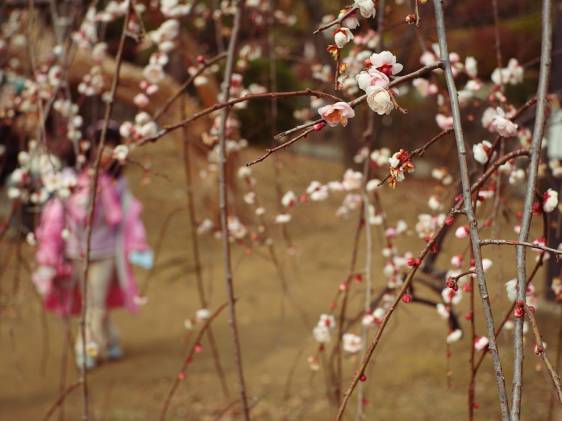
The park’s location, Umegaoka (which means “Plum Blossom Hill”) in Setagaya Ward, should already tip you off about what to expect here. Hanegi Park has about 650 plum trees, making it a fitting location for the Setagaya Plum Blossom Festival. On weekends during the festival, vendors sell plum-themed food such as madeleines and jellies, and there are also some performances. You can still swing by the park itself to see the plum trees on weekdays, too.
2. Koishikawa Kōrakuen
Plum-blossom dates for 2025: Feb. 1 to Mar. 2. Check here for the flowering situation.¥300

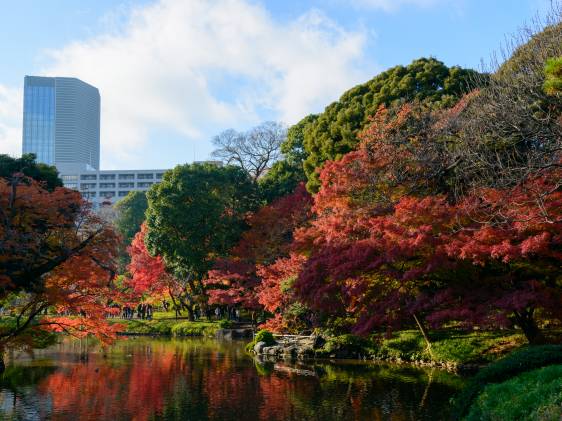
Centrally located near Tokyo Dome, Koishikawa Kōrakuen is beautiful all year round. While it has dates marked as plum-blossom season, it’s a more relaxed plum-blossom festival in that there are only a few special performances; it’s all about enjoying the fragrant blossoms in an historic, manicured setting. The park only has a small number of plum trees, but you can enjoy the rest of the scenery, too.
Seniors: ¥150
3. Yushima Tenjin
Yushima Tenjin Plum Blossom Festival 2025: Feb. 8 to Mar. 8Free
This shrine is devoted to Sugawara no Michizane, a scholar who became deified as a tenjin (god of learning). Since the University of Tokyo is a short walk away, it’s unsurprising that many prospective students come here to pray for luck in their entrance exams.

Although the shrine is small, it’s known for its beautiful plum blossoms. Annually, it commemorates the plum blossoms with a month-long festival filled with performances, a mikoshi (portable shrine) procession, and food stalls. The plum-tree-lined staircase going down past the shrine and out into the streets is a wonderful sight.

4. Ushi-Tenjin Kitano Shrine
Koubai Red Plum Blossom Festival 2025: Feb. 1 to 25; with a special event on Feb. 16Free

This shrine is known for its striking red plum blossoms (called kōbai) and also its pink weeping plum blossoms (shidare ume). For the duration of the festival, you can try amazake (a fermented rice drink, which is actually non-alcoholic) and ginger tea on Saturdays. On Sunday, they offer plum sweets, dried plums, and Kitano no Fukukōbai, a kind of umeshu (plum wine) that’s been fermented for 5–10 years.
On February 16, visitors will be treated to a ceremony, taiko performance, and 200 visitors can take home a small plum twig.
If you’re into collecting goshuin (temple and shrine stamps), Ushi-Tenjin Kitano will have commemorative ume matsuri stamps.
5. Shiba Park
Plum-blossom dates for 2025: From late Jan. to early March. Check the park’s X accountfor the current flowering situation.Free

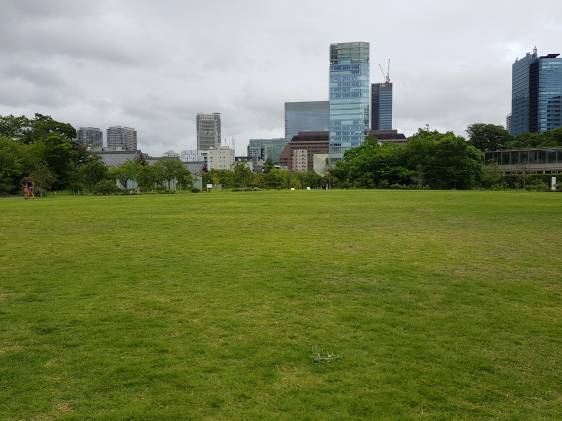
Here’s where you can enjoy the plum blossoms with Tokyo Tower in the background. With only 70 trees, Shiba Park’s so-called plum forest may be modest compared to the other places listed here, but it’s nonetheless spectacular. The trees, which used to be called the “Silver World” in the Edo period, were transported here from present-day Shinjuku in the Meiji Era.
6. Kameido Tenjin
Plum-blossom dates for 2025: Early Feb. to early MarchFree

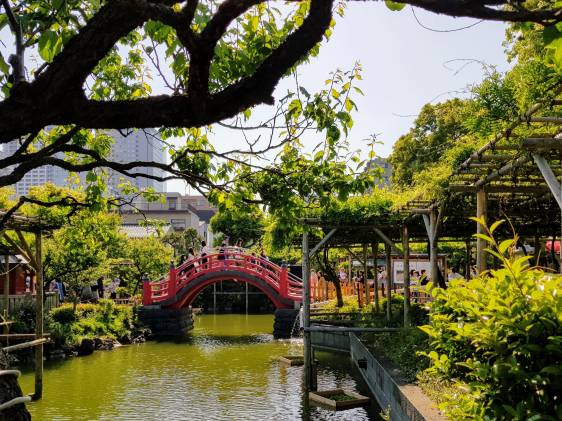
Another place with “Tenjin” in its name? Here’s a hint: Tenjin shrines tend to be associated with plum blossoms. Kameido Tenjin is known as the shitamachi (downtown) Tenjin shrine, and it has over 300 plum trees. Amidst those is a famous tree — “Goken no Ume” — which has both red and white blossoms. The shrine’s arched bridge is also a sight to behold.
7. Ikegami Plum Garden
Plum-blossom dates for 2025: Early Feb. to early March¥100

Ikegami Baien (“baien” means “plum garden”) was a private garden left to Ota Ward after the owner’s death. The garden is home to over 370 plum trees, made up of 30 unique varieties.
Children: ¥20
8. Koganei Park Plum Grove
Plum-blossom dates for 2025: Early Feb. to early March. Check flowering updates.Free
About 90 trees of around 30 kinds of plum fill the plum grove in the south of Koganei Park, not far from the Edo-Tokyo Open Air Architectural Museum. The park offers wide open spaces where you can unfurl a picnic blanket and spend a leisurely afternoon.

9. Jindai Botanical Garden
Plum Blossom Festival at Jindai Botanical Gardens 2025: Feb. 11 to Mar. 2¥500
The plum-blossom festival at Jindai Botanical Garden features a musical concert and a guided tour. Gander at over 100 trees lining the paths as you stroll around this expansive botanical garden. If you are tired of staring at pinks and whites (but why would you be?), then the garden also has a lot more species of plants and flowers to add to your color palette.

Plum-blossom day trips from Tokyo
And if you want to go somewhere slightly past Tokyo for a day trip …
10. Odawara Plum Blossom Festival
Odawara Plum Blossom Festival 2025: Feb. 1 to 24Free

Odawara is in Kanagawa Prefecture, but is only an hour and a half away by train from Tokyo. The plum-blossom festival mainly takes place at and around Sōga Bessho Bairin, a grove of about 35,000(!) plum trees that offers a clear view of Mt. Fuji. There are different kinds of plum blossoms here — red, white, pink, weeping; you name it!
Before going, check the event schedule (in Japanese).

11. Atami Plum Garden
Atami Plum Festival 2025: Jan. 6 to Mar. 3¥300
If you happen to be near Atami — or fancy making a day trip out of it — the Atami Plum Garden is worth a visit. It also hosts a Plum Blossom Festival throughout January and February. Atami is known to have some of the earliest plum tree blossoms around Tokyo, and the Atami Plum Garden has 60 different varieties of plum trees.
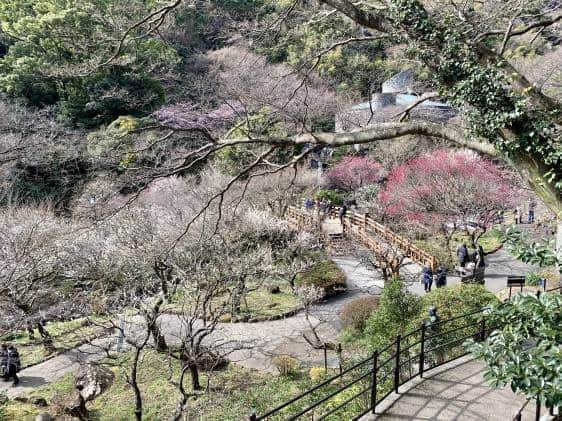
12. Ōme Plum Park
Yoshino Baigo Ume Matsuri 2025: Feb. 15 to Mar. 20Free
Though it’s around 1 hour 30 minutes from Shinjuku, Ōme is actually still part of Tokyo. In the far west of the prefecture, with the Tama River running through it, Ōme is an oasis for nature-lovers — and it is famous throughout the country for its plum blossoms.
Head to Umeno Park — “Plum Park” — to see more than 1200 plum trees in bloom between mid-February and mid-March. In 2014, all of the trees had to be chopped down because of a virus, but they have since been replanted — and bloom in brilliant pinks and reds each spring.

13. Mito Plum Festival: Kairakuen and Kodokan
Mito Plum Festival 2025: Feb. 11 to Mar. 20¥320 entry for Kairakuen Garden

Mito’s Kairakuen, one of Japan’s most famous gardens, sees 100 different types of plum bloom in early spring. 3,000 trees blanket the park, shooting a sweet fragrance into the air.
Another popular spot in the area is Kodokan, a former samurai school, which has a smaller, but just as pleasant grove of its own — plus it’s only an 8-minute walk from Mito Station, as opposed to a 20-minute bus ride to Kairakuen. Mito can be reached via Tokyo Station on a limited-express train. The journey takes around 1 hour and 15 minutes.
14. Takao Plum Village
Plum-blossom dates for 2025: mid-March. Check the flowering forecast.Free

Blooming a little later in March are the plum blossoms of Takao Baigo (Takao Plum Village). Around 10,000 white, red, and pink varieties pop up in the area near Takao Station and Takaosanguchi Station (where you get off to visit Mount Takao). There isn’t one spot to see them all, but a 4.5-kilometer path along the old Koshu Kaido and Kobotoke River that has many groves.
Kogesawa Plum Grove is one of the most popular, as it opens only during plum-blossom season (March 1 to 16 in 2025). You can also just opt to visit the Promenade Plum Grove, which is a 15-minute walk from Takao Station or a 10-minute walk from Takaosanguchi Station.
15. Sankeien Garden in Yokohama
Sankeien Garden Plum Festival 2025: Feb. 9 to Mar. 3¥900
Yokohama is less than 30 minutes from Tokyo, but Sankeien Garden takes an extra 25 minutes or so to get to. It’s especially worth the effort during plum-blossom season. Both early-blooming and late-blooming varieties can be found in the historical, Japanese-style garden. During the annual plum-blossom festival, Sankeien offers performances, a bonsai exhibition, and complimentary tea.

Frequently asked questions
Bring us your flower questions. We have answers.
What’s the difference between cherry blossoms and plum blossoms?

Plum blossoms’ reddish, pink, or white flowers usually remain in bloom until early March. There’s an occasional overlap between late-blooming plum blossoms and early-blooming cherry blossoms, which can lead to some confusion. If they look similar to you, just remember that cherry blossoms have split-ended petals, whereas plum blossoms don’t. Also, several cherry blossoms bloom from a single bud and are attached to the branch by a long stem, while there’s only one plum blossom per bud. And plum blossoms often have a lovely fragrance, while cherry blossoms don’t smell like much.

When can you see plum blossoms in Tokyo?
Most plum blossoms in Tokyo start to bloom around mid-February, although some varieties bloom earlier. Weather also plays a role in things, so a mild winter means you might see plum blossoms in early February.
Where are the best places to see plum blossoms in Japan?
Besides Tokyo, Kyoto is a great spot to see plum blossoms. Kitano Tenmangu Shrine is especially well known for them, and if you time it right you can catch the Baikasai Plum Blossom Festival, which is held there annually.
Can you eat the plums from a plum blossom tree?
Yes! Plums are often used in popular Japanese dishes such as umeshu (plum wine) and umeboshi (pickled plums). Be aware that green Japanese plums are a lot more sour than the Western-type, so you’ll want to eat them processed rather than directly from the tree.
Still fixated on seeing those world-famous cherry blossoms? Here is our complete guide to Tokyo’s best cherry-blossom spots.
While we do our best to ensure it’s correct, information is subject to change. Dates should be treated as approximate, as nature does her own thing. This post was first published in January 2015 and is updated annually. Last updated in January 2025, by Alexandra Ziminski.
Get our Tokyo Cheapo Hacks direct to your inbox



-

Tokyo Flower Mega Guide: Blooms To See Every Month of the Year
It's almost sunflower season.
-

The Ultimate Tokyo to Kawaguchiko Day Trip
Explore the most popular of the Fuji Five Lakes.
-

Tokyo Events This Week: Lantern Matsuri, Enoshima Festival, and a Conch Shell Dance
Tokyo events for Monday, July 7 to Sunday, July 13, 2025.
-

The Complete Guide To Getting From Tokyo to Mount Fuji
All your options, in one handy guide.
-

101 Fun and Interesting Things To Do in Tokyo
This should keep you busy for a while.
-

Ultimate Tokyo Fireworks Guide: 2025 Edition
Get your yukata and picnic basket ready—here's a round-up of festivals both big and small.
-

July 2025: 8 Tokyo Events Not To Miss
Get your yukata on and get out there.
-

International Musicians Touring Japan in 2025 and 2026
Updated with a raft of big names—including Billie Eilish and Lady Gaga.
-

Best Summer Fireworks in and Around Yokohama
Head out of Tokyo for an evening of fun—with fewer high-rises to block your view.
-
 Tokyo’s Best Apartment-Style Hotels, by Area
 -
 Highway to Hot Springs: Tokyo to Kusatsu Onsen by Bus
 -
 The Best Pocket Wi-Fi for Visiting Japan — Compared
 -
 Go-Karting in Tokyo: Everything You Need To Know
 -
 Morning Sumo Practice in Tokyo—Everything You Need To Know
 -
 First-Time Harajuku Itinerary: Fashion, Street Food, and More
Recommended hotels located nearby
-
Hatsudai 42.8 km
-
Ekoda 41.0 km
-
Shimokitazawa 43.0 km
-
Ōme 3.3 km


